Tsubame-Sanjo: The Hidden Knife Capital of Japan
When knife enthusiasts talk about Japanese blade-making, three cities dominate the conversation: Sakai, Seki, and Echizen. But there's a fourth region that quietly produces some of the best kitchen knives in the world — and sells them for less than you'd expect.
Quick Answer
- Tsubame-Sanjo in Niigata Prefecture is Japan's fourth major knife-producing region, built on 400+ years of metalworking tradition that began with *wa-kugi* (Japanese nails) in the early Edo period — farmers turned smiths to survive devastating Shinano River floods
- The region produces knives that blend Western and Japanese techniques: double-bevel blades with Japanese steel sensibility, multi-layer Damascus cladding, and ergonomic handles that work for both push-cut and rock-cut styles
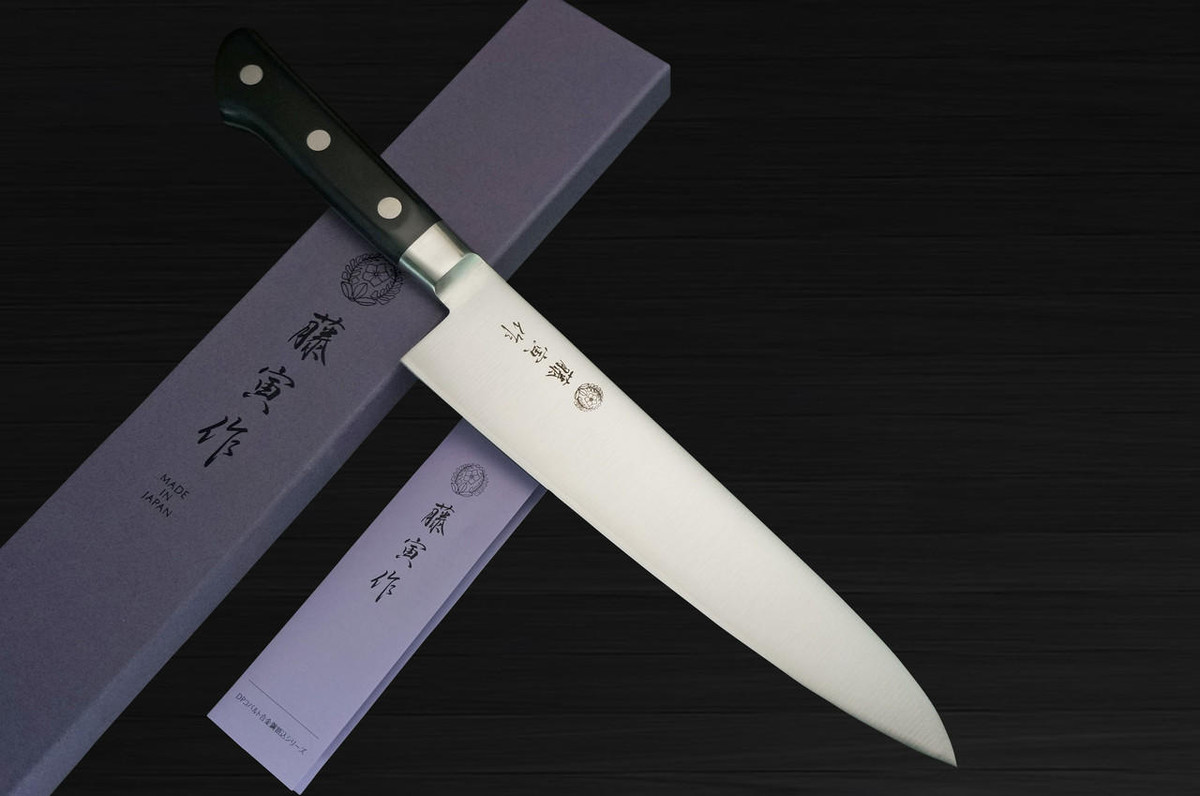
- Major makers include Tojiro (藤次郎), whose DPコバルト合金鋼 series uses VG-10 cobalt alloy steel and ships to 50+ countries, and Tadafusa (庖丁工房タダフサ), whose patented carbonized chestnut wood handles and SLD steel blades have created a cult following
- Tsubame-Sanjo knives typically offer the best price-to-performance ratio among Japan's knife capitals — professional-grade construction at ¥4,000–¥15,000, roughly 30–50% less than equivalent Sakai pieces
Why Tsubame-Sanjo Deserves Your Attention
Source: Pixabay - Free license
When knife enthusiasts talk about Japanese blade-making, three cities dominate the conversation: Sakai, Seki, and Echizen. But there's a fourth region that quietly produces some of the best kitchen knives in the world — and sells them for less than you'd expect.
Tsubame-Sanjo isn't one city. It's two neighboring cities — Tsubame (燕市) and Sanjo (三条市) — in Niigata Prefecture, about 260km north of Tokyo on the Sea of Japan coast. Together, they form one of the most concentrated metalworking clusters on the planet. The region makes everything from stainless steel tableware to titanium outdoor gear, surgical instruments to kitchen knives. Apple's iPod backs were polished here. The espresso spoons at five-star hotels worldwide — many come from Tsubame.
But for knife buyers, the critical point is this: Tsubame-Sanjo's manufacturing infrastructure — its deep bench of CNC operators, heat-treatment specialists, polishing artisans, and metallurgists — allows its knife makers to produce blades at a quality-to-cost ratio that other regions struggle to match. If you've ever wondered how Tojiro sells a VG-10 cobalt steel gyuto for ¥5,500 while equivalent Sakai pieces run ¥12,000+, the answer is Tsubame-Sanjo's industrial ecosystem.
This article draws exclusively on Japanese-language sources — manufacturer websites, Niigata Prefecture tourism materials, municipal government records, and regional industry publications — to tell the story of how a flood-prone farming district became one of Japan's most important knife-making centers.
The History: From Flood-Ravaged Farmland to Metal Town
The Wa-Kugi Origin Story
Tsubame-Sanjo's metalworking tradition didn't start with knives. It started with nails.
The Shinano River — Japan's longest at 367km — runs through the Niigata plains and was notorious for catastrophic floods. Tsubame and Sanjo sat in the flood zone. Farmers whose rice paddies were regularly destroyed needed supplementary income. In the early Edo period (early 1600s), the Tokugawa shogunate dispatched craftsmen from Edo to teach nail-making (wa-kugi) as a side industry for these struggling agricultural communities (Source: Tsubame City, "金属と向き合って400年").
The initiative worked. By the mid-Edo period, wa-kugi production had become Tsubame's primary industry, accounting for approximately 80% of the area's industrial output up through the early Meiji period (Source: Tsubame City government historical records). The skills learned forging nails — heating metal, hammer work, understanding carbon content and tempering — became the foundation for everything that followed.
From Nails to Pipes to Tableware to Knives
The historical arc of Tsubame-Sanjo reads like a masterclass in industrial adaptation. Every time a product became obsolete, local craftsmen pivoted to the next thing:
1600s–1860s: Japanese nails (wa-kugi) The core product for over 200 years. Tsubame smiths produced hand-forged iron nails for construction, furniture, and shipbuilding.
1700s: Beaten copperware (tsuiki doki) and smoking pipes (kiseru) In the 1700s, techniques for making tsuiki doki (hammered copperware) and kiseru (traditional Japanese smoking pipes) were introduced and developed as new products alongside nails (Source: Tsubame City, "金属と向き合って400年").
1868–1900s: The crisis and pivot The Meiji Restoration brought Western nails (machine-made wire nails) and machine-rolled cigarettes to Japan, devastating both the wa-kugi and kiseru industries simultaneously. Tsubame's craftsmen faced extinction. But rather than abandon metalworking, they pivoted to Western tableware — forks, knives, and spoons — learning the techniques from imported European examples (Source: archive.kouba-fes.jp, "燕三条の歴史").
1911–1950s: Tableware boom Tsubame became Japan's Western tableware capital. By the mid-20th century, the region produced the vast majority of Japan's stainless steel cutlery. This period was critical because it forced Tsubame's craftsmen to master stainless steel — a material that would later define their approach to kitchen knives.
Meanwhile in Sanjo: The blacksmith tradition While Tsubame focused on tableware, neighboring Sanjo developed its own metalworking identity around forged tools. Sanjo's history as a kaji no machi (blacksmith town) traces to the mid-1600s, when specialized blacksmith artisans (kaji sengyou shokunin) first emerged in the city (Source: Sanjo Monozukuri Gakko, "株式会社タダフサ" profile). These smiths produced agricultural tools — sickles, hoes, axes — and construction hardware. The forging techniques they developed for tools translated directly into knife-making.
1950s–present: Kitchen knife production The convergence happened when Tsubame's stainless steel expertise met Sanjo's forging tradition. The result was a knife-making approach that was fundamentally different from Sakai (hand-forged single-bevel artisan work) or Seki (high-volume industrial production). Tsubame-Sanjo occupied the middle ground: semi-artisanal production with industrial consistency, using modern materials like VG-10, cobalt alloy steels, and multi-layer Damascus cladding.
The Five Knife Capitals of Japan
Japan officially recognizes five major knife-producing regions, each with a distinct identity (our Japanese knife makers by region guide profiles the signature steels and shokunin behind each one):
| Region | Prefecture | Specialty | Primary Market |
|---|---|---|---|
| Sakai | Osaka | Single-bevel professional knives | Washoku chefs (90% market share) |
| Seki | Gifu | Mass-produced stainless knives | Household consumers (55% of Japan's production) |
| Echizen | Fukui | Fire-forged carbon steel blades | Professional and serious home cooks |
| Tsubame-Sanjo | Niigata | Western-style Japanese knives | Domestic and international markets |
| Tosa | Kochi | Rough-forged rustic knives | Agricultural and outdoor use |
Tsubame-Sanjo's niche is clear: it makes knives that bridge the gap between Japanese craftsmanship and Western kitchen use. Its gyuto, petty, and bread knives are designed for international cutting techniques while incorporating Japanese steel technology and sharpening geometry. This positioning has made Tsubame-Sanjo the region of choice for many international buyers encountering Japanese knives for the first time.
For a deeper comparison of the traditional "Big Three" regions, see our guide to Sakai, Seki, and Echizen.
The Industrial Ecosystem: Why Quality Costs Less Here
Vertical Integration Within a Cluster
The key to understanding Tsubame-Sanjo's value proposition is its industrial cluster structure. Within a 10km radius, you'll find:
- Steel suppliers and warehouses stocking blanks, bar stock, and specialty alloys
- Heat-treatment facilities with precisely controlled furnaces for quenching and tempering
- CNC machining shops that cut blade profiles to sub-millimeter tolerances
- Grinding and polishing specialists (many of whom also serve the tableware industry)
- Handle manufacturers working in wood, resin, and stainless steel
- Packaging, quality control, and logistics operations
No single knife company needs to do everything in-house. A maker like Tojiro can outsource specific steps to neighboring specialists, each of whom serves multiple manufacturers and runs high-volume operations. This shared infrastructure drives costs down without sacrificing quality — the same polishing shop that finishes restaurant-grade tableware for export to Europe also polishes Tojiro blade faces.
Compare this to Sakai, where three separate artisan workshops handle forging, sharpening, and handle-fitting for each individual knife. Sakai's system produces extraordinary results but at a price point that reflects the labor of three independent master craftsmen. Tsubame-Sanjo achieves 80–90% of that quality through cluster efficiency at 50–70% of the cost.
The Manufacturing Process: Semi-Artisanal Production
A typical Tsubame-Sanjo kitchen knife goes through these stages:
1. Steel selection and lamination Most Tsubame-Sanjo makers use laminated construction — a hard cutting-edge steel (VG-10, cobalt alloy, SLD, or similar) sandwiched between softer stainless cladding. For Damascus-finish knives, multiple alternating layers of hard and soft steel are folded and forge-welded, creating the distinctive wavy suminagashi (ink-flow) pattern on the blade surface. Tojiro's SIPPU (シッポウ) series, for example, uses 63-layer Damascus cladding over a VG-10 core.
2. Rough forging or stamping Depending on the maker and price point, the blade blank is either drop-forged (heated and hammer-pressed in a die) or stamped from sheet stock. Forged blades develop a grain structure that some users prefer for edge retention. Stamped blades are lighter and more uniform. Both methods are used across the region.
3. Heat treatment This is where Tsubame-Sanjo's industrial infrastructure shines. Precise heat treatment — heating the blade to a specific temperature, quenching in oil or water, then tempering at a lower temperature — determines hardness, toughness, and edge stability. Commercial heat-treatment facilities in the region use computer-controlled furnaces that maintain temperature within ±2°C, achieving consistent Rockwell hardness readings across production runs. Tojiro's VG-10 blades, for example, are hardened to HRC 60, a sweet spot that balances edge retention with resistance to chipping (Source: tojiro.net, "切れ味と硬度").
4. Grinding and blade geometry The blade is ground to its final profile — typically a convex or flat grind for double-bevel knives. Edge angle is set at this stage, usually 15–16 degrees per side for double-bevel kitchen knives (Source: tojiro.net, "刀身の構造"). The shinogi line (the transition between the primary bevel and the blade face) is carefully positioned to create the desired balance between cutting ability and food release.
5. Handle fitting Handles range from traditional Japanese wa handles (octagonal or D-shaped magnolia wood with buffalo horn ferrule) to Western yo handles (riveted pakkawood, micarta, or stainless steel). Tsubame-Sanjo makers offer both styles, though Western handles are more common in their product lines — reflecting the region's export orientation. Our guide to Japanese knife handles covers the wa vs. yo decision in detail.
6. Final sharpening and quality control The edge receives its final sharpening, usually on synthetic whetstones progressing from #1000 to #3000 grit or higher. Each blade is inspected for straightness, edge consistency, and cosmetic defects.
The Makers: Who's Who in Tsubame-Sanjo
Source: Hocho-Knife.com
Tojiro (藤次郎) — The International Powerhouse
Tojiro is arguably Tsubame-Sanjo's most recognized knife brand globally. Founded in 1953 as Fujitora Industry (藤寅工業), the company rebranded its knife line as "Tojiro" and has since built a reputation as the entry point into serious Japanese knives.
Key facts:
- Headquartered in Tsubame, Niigata
- Ships to 50+ countries worldwide
- Product range spans from ¥1,500 economy lines to ¥50,000+ artisan pieces
- Best-known series: Tojiro DP (DPコバルト合金鋼割込), which uses VG-10 cobalt alloy steel in a three-layer laminated construction
The Tojiro DP series is the benchmark for value in Japanese knives. The Tojiro DP gyuto (210mm) typically sells for ¥5,500–¥7,000 in Japan — a fraction of the cost of equivalent VG-10 knives from other regions. The blade is hardened to HRC 60, has a 13-degree per side edge angle at the factory, and features an eco-wood (tsumiki) handle with a stainless steel bolster.
According to Kakaku.com rankings, Tojiro knives consistently appear in the top 10 most popular kitchen knives in Japan, competing against household names like Kai (Seki) and Henckels (Source: kakaku.com, "包丁の人気商品ランキング").
Price breakdown for popular Tojiro models (Japanese domestic):
| Model | Steel | Size | Price (approx.) |
|---|---|---|---|
| Tojiro Economy | MoV stainless | 170mm santoku | ¥1,500–¥2,000 |
| Tojiro DP F-808 | VG-10 cobalt | 180mm santoku | ¥4,400 |
| Tojiro DP F-807 | VG-10 cobalt | 180mm gyuto | ¥5,500 |
| Tojiro PRO DP | VG-10 cobalt | 210mm gyuto | ¥11,000 |
| Tojiro SIPPU | VG-10/63-layer Damascus | 210mm gyuto | ¥22,000 |
| Tojiro Flash | VG-10/Damascus | 180mm santoku | ¥14,300 |
For an in-depth look at VG-10 and other popular knife steels, see our Japanese knife steel guide.
Tadafusa (庖丁工房タダフサ) — The Design-Forward Artisan
If Tojiro represents Tsubame-Sanjo's industrial efficiency, Tadafusa represents its artisan soul. Based in Sanjo City, Tadafusa is a small workshop that has achieved near-cult status in Japan through a combination of genuine craftsmanship and smart product design.
Key facts:
- Located in Sanjo, Niigata — the blacksmith side of the Tsubame-Sanjo cluster
- Small-batch production with an emphasis on hand-finishing
- Famous for the "Basic 3" knife set concept: santoku + petty + bread knife as the foundation of a home kitchen
- Uses SLD steel (a high-carbon, high-chromium die steel) for the cutting edge
The patented carbonized chestnut wood handle is Tadafusa's signature innovation. They take chestnut wood (kuri no ki), smoke it in a furnace until it reaches a state just short of charcoal — a process Tadafusa calls kokin tanka moku (抗菌炭化木, "antibacterial carbonized wood"). The result is a handle material that is naturally antibacterial, water-resistant, and has a distinctive dark, matte finish with a warm feel in the hand. This technique is protected by a patent held by Tadafusa (Source: cotogoto.jp, "包丁 基本の3本 庖丁工房タダフサ").
The blade construction uses a three-layer laminate — SLD steel core flanked by stainless steel cladding. SLD steel is harder than VG-10 (approximately HRC 62–63 vs. HRC 58–60) and holds its edge longer, but it's more brittle and requires more careful use. The stainless cladding protects the carbon-rich core from rust while keeping the cutting edge razor-sharp.
Tadafusa's longevity claim is remarkable: customers have reported using Tadafusa knives for 30–40 years, passed down from grandmothers, with the blade still functional after decades of sharpening (Source: Things Niigata, "庖丁工房タダフサの鋼包丁"). As long as the steel core remains, the knife can be resharpened indefinitely.
Price range for Tadafusa knives:
| Model | Steel | Size | Price (approx.) |
|---|---|---|---|
| Santoku (Basic 3) | SLD/stainless clad | 170mm | ¥9,350 |
| Petty (Basic 3) | SLD/stainless clad | 130mm | ¥7,150 |
| Bread knife (Basic 3) | SLD/stainless clad | 230mm | ¥8,800 |
| Nakiri (Next 1) | SLD/stainless clad | 165mm | ¥9,900 |
| Gyuto (Next 1) | SLD/stainless clad | 180mm | ¥10,450 |
Other Notable Tsubame-Sanjo Makers
Niigata Hamono (新潟刃物) / Ichimonji-ren (一刃鍛) Operating under the brand Ichimonji-ren, this Tsubame-based manufacturer specializes in hand-forged kitchen knives using traditional single-forging techniques (ikka-tan). Their knives lean more toward traditional Japanese construction — single-bevel options, carbon steel, wa handles — while still benefiting from Tsubame's modern heat-treatment infrastructure (Source: niigata-hamono.co.jp).
Sanjo Yoshimune (三条義宗) A Sanjo-based maker focused on Damascus-clad wa handle knives. Their products use VG-10 or Shirogami #2 cores with multi-layer Damascus cladding and traditional octagonal magnolia handles. The aesthetic leans rustic-artisanal — hand-hammered (tsuchime) finishes, visible forge marks, and natural handle materials. Prices range from ¥8,000 to ¥25,000 (Source: damascus-houchou.com).
Kogetsu / Skater (鴻月) A newer entrant that markets Tsubame-Sanjo-made knives through direct-to-consumer channels. Their editorial content traces the wa-kugi origins of the region's metalworking (Source: kogetsu-skater.jp, "和釘から始まった金属の街、燕三条の包丁").
What Makes Tsubame-Sanjo Knives Different
The Steel Philosophy
While Sakai defaults to high-carbon hagane (Shirogami, Aogami) and Seki builds on mass-market stainless (MoV, AUS-8), Tsubame-Sanjo occupies a middle ground. The region's most common steels are:
VG-10 (V Gold 10): A cobalt-enhanced stainless steel that balances corrosion resistance with excellent edge retention. HRC 58–60. This is Tojiro's signature steel and the region's workhorse.
SLD (Steel for Cold Die): A high-carbon, high-chromium tool steel used by Tadafusa and others. HRC 62–63. Better edge retention than VG-10 but less corrosion resistance and more brittle.
Cobalt alloy steels: Various proprietary blends that add cobalt, vanadium, and molybdenum to achieve high hardness without excessive brittleness.
Damascus cladding layers: Alternating layers of hard and soft stainless steel (typically 33, 45, or 63 layers) folded around the core steel. The Damascus pattern is primarily aesthetic but also provides a slight benefit in food release due to surface texture.
For a complete breakdown of Japanese knife steels, including Shirogami, Aogami, and the extreme-performance ZDP-189 and HAP40, see our steel guide and extreme steel comparison.
The Edge Geometry
Tsubame-Sanjo knives are predominantly double-bevel (ryoba) — sharpened on both sides. This contrasts with Sakai's traditional single-bevel (kataba) construction. The double-bevel approach offers two advantages for home cooks:
- Ambidextrous use: Single-bevel knives are handed — a right-handed yanagiba can't be used left-handed without modification. Double-bevel knives work for everyone.
- Easier sharpening: You sharpen both sides equally, at roughly 15 degrees per side. Single-bevel sharpening requires different techniques for the flat back (ura) and the beveled face.
Factory edge angles on Tsubame-Sanjo knives typically run 13–16 degrees per side, depending on the steel hardness. Harder steels (VG-10, SLD) support more acute angles without deformation; softer stainless takes a slightly more obtuse angle for durability.
To learn the correct sharpening technique for these knives, see our whetstone sharpening guide.
The Handle Approach
Tsubame-Sanjo makers offer both wa (Japanese) and yo (Western) handle options, but the region's default leans Western. This makes sense given the export orientation — international buyers are generally more comfortable with riveted Western handles than with press-fit octagonal magnolia handles.
Notable exceptions include Tadafusa's carbonized chestnut handles (a hybrid that feels Japanese in spirit but universal in ergonomics) and Sanjo Yoshimune's traditional magnolia wa handles.
For more on the handle debate, our wa vs. yo handle guide covers materials, ergonomics, and maintenance in detail.
The Kouba Festival: When Factories Open Their Doors
Every October, Tsubame-Sanjo hosts the Kouba no Saiten (工場の祭典, "Factory Festival"), a multi-day event where dozens of local factories and workshops open their doors to the public. Visitors can watch knife forging, tableware polishing, and copperware hammering in real time. Some workshops offer hands-on experiences where you can forge your own nail or polish a spoon.
The festival is significant because it reveals the depth of the region's manufacturing ecosystem. You don't just see knife makers — you see the steel suppliers, heat treaters, handle carvers, and sharpening specialists that form the supply chain. It's a rare chance to understand how the whole cluster functions as an integrated system.
The festival typically runs for 3–4 days in early October and is free to attend. Details are published annually at kouba-fes.jp (Source: archive.kouba-fes.jp, "燕三条の歴史").
For visitors outside the festival season, the Tsubame-Sanjo Jiba Sangyo Shinko Center (燕三条地場産業振興センター) operates year-round as a permanent exhibition and retail space. It stocks approximately 10,000 products from local manufacturers — including knives, tableware, cookware, and tools — and serves as both a museum of local industry and a shopping destination (Source: tsjiba.or.jp). The center has been designated as a Michi no Eki (roadside station), making it an accessible stop for road-trippers.
Buying Guide: How to Choose a Tsubame-Sanjo Knife
 Source: Hocho-Knife.com
Source: Pixabay - Free license
Source: Hocho-Knife.com
Source: Pixabay - Free license
For Beginners: Start with Tojiro DP
The Tojiro DP series is the single most recommended entry point into Japanese knives — not just from Tsubame-Sanjo, but from any region. The combination of VG-10 steel, HRC 60 hardness, three-layer laminated construction, and a price under ¥6,000 makes it almost impossible to beat on value.
Recommended first purchase: Tojiro DP F-808 Santoku (170mm, approximately ¥4,400) or Tojiro DP F-807 Gyuto (180mm, approximately ¥5,500). If you're unsure whether to start with a santoku or gyuto, our santoku vs. gyuto comparison walks you through the decision.
For Design-Conscious Cooks: Tadafusa Basic 3
If aesthetics and feel matter to you as much as cutting performance, Tadafusa's "Basic 3" set (santoku, petty, bread knife) is a compelling package. The carbonized chestnut handles are genuinely beautiful — warm, textured, and unlike anything else on the market. The SLD steel core cuts aggressively and holds its edge well. The downside: SLD is less forgiving than VG-10 if you're rough with your knife.
Total cost for the Basic 3 set: Approximately ¥25,300 at retail.
For Enthusiasts: Damascus and Artisan Lines
Tojiro's SIPPU and Flash series, Sanjo Yoshimune's Damascus knives, and limited-edition collaborations from smaller Tsubame-Sanjo workshops cater to enthusiasts who want the region's engineering combined with premium materials and finishes. Expect to spend ¥15,000–¥30,000 for a single knife in this tier.
Maintenance Expectations
Tsubame-Sanjo knives — particularly the stainless-clad models from Tojiro and Tadafusa — are among the lowest-maintenance Japanese knives available. The stainless cladding resists rust even with casual care. The hard steel core at the cutting edge is the only part that needs whetstone sharpening; the cladding can be wiped clean.
For full maintenance protocols, see our care and rust prevention guide.
International Recognition and Export Growth
Tsubame-Sanjo's knife industry has seen significant international growth over the past decade. Tojiro's export program now reaches over 50 countries, with particularly strong demand in North America, Europe, and Southeast Asia. The region's knives appear regularly in international knife competitions and have been featured in culinary publications from Food & Wine to Bon Appétit.
The Tsubame-Sanjo Jiba Sangyo Shinko Center reports that international buyer delegations visit the region annually, drawn by the combination of quality and pricing that's difficult to replicate elsewhere. Several Tsubame-Sanjo makers have begun offering factory tours specifically for international visitors, with English-language guides available during the Kouba Festival.
The Japanese government has also supported the region's export ambitions through the Japan Brand program, which helps traditional manufacturing regions market their products internationally. Tsubame-Sanjo's metalwork — including knives — has been featured in Japanese government trade exhibitions at venues from Paris to Dubai.
For home cooks outside Japan, the practical implication is clear: Tsubame-Sanjo knives are increasingly available through international retailers and direct shipping. Tojiro's international website offers worldwide delivery, and Tadafusa accepts orders through multiple English-language stockists. The price premium for international purchases is typically 30–50% over Japanese domestic prices, but even with that markup, Tsubame-Sanjo knives remain competitively priced against domestic alternatives in most markets.
Tsubame-Sanjo vs. Other Japanese Knife Regions
| Factor | Tsubame-Sanjo | Sakai | Seki | Echizen |
|---|---|---|---|---|
| Primary construction | Laminated double-bevel | Laminated single-bevel | Stamped or forged stainless | Fire-forged laminated |
| Signature steel | VG-10, SLD, cobalt alloys | Shirogami, Aogami | MoV, AUS-8, VG-10 | Aogami Super, Shirogami |
| Handle default | Western (yo) | Japanese (wa) | Western (yo) | Japanese (wa) |
| Price range (gyuto) | ¥4,000–¥25,000 | ¥12,000–¥60,000+ | ¥1,500–¥15,000 | ¥8,000–¥40,000 |
| Best for | Value-seekers, international cooks | Washoku professionals | Casual home cooks | Carbon steel enthusiasts |
| Export orientation | High | Low | High | Medium |
| Production method | Semi-artisanal + industrial | Full artisan (division of labor) | Industrial | Artisan |
Frequently Asked Questions
Are Tsubame-Sanjo knives considered "real" Japanese knives?
Absolutely. Tsubame-Sanjo is one of Japan's five officially recognized knife-producing regions. The fact that the region specializes in double-bevel knives rather than traditional single-bevel styles doesn't make them less Japanese — it makes them a different tradition within Japanese knife-making. The steels, heat treatment, and grinding precision are distinctly Japanese. What Tsubame-Sanjo adds is accessibility: these knives don't require the specialized skills (or budget) of traditional Sakai pieces, but they cut like Japanese knives should.
How does Tojiro sell VG-10 knives so cheaply?
Three factors: (1) cluster economics — Tojiro benefits from Tsubame-Sanjo's shared manufacturing infrastructure, including heat-treatment facilities and grinding specialists that serve multiple companies; (2) volume — Tojiro produces significantly more knives per year than a typical Sakai workshop, spreading fixed costs; (3) semi-automated processes — blade profiling and rough grinding use CNC equipment, with hand-finishing reserved for final sharpening and quality control. The result is a knife that's 80–90% as refined as a fully hand-made piece at 40–50% of the price.
Is Tadafusa's carbonized chestnut handle worth the premium?
For many buyers, yes. The handle is genuinely unique — the carbonization process (which Tadafusa patented) creates a material that's naturally antibacterial, resists water absorption, and has a tactile warmth that plastic and resin can't match. Practically, it means less maintenance: the handle won't harbor bacteria even without oiling, and it won't crack or warp from moisture exposure. The aesthetic appeal is subjective, but the dark, matte finish has a minimalist quality that photographs well and ages gracefully. Customers have reported these handles lasting 30–40 years with basic care (Source: Things Niigata).
Should I visit Tsubame-Sanjo to buy knives?
If you're in Japan, the Tsubame-Sanjo Jiba Sangyo Shinko Center is worth a visit — it stocks knives from multiple local makers at retail prices, plus you can see the broader range of metalwork the region produces. For the full experience, time your visit with the annual Kouba no Saiten factory festival in October, when you can watch knives being made and even try forging yourself. From Tokyo, Tsubame-Sanjo Station is accessible via Joetsu Shinkansen (about 2 hours).
What's the best Tsubame-Sanjo knife for someone who already owns a Sakai knife?
If you already have a Sakai single-bevel knife (yanagiba, deba, or usuba), a Tsubame-Sanjo double-bevel knife is the perfect complement. A Tojiro DP gyuto (210mm) or Tadafusa santoku gives you a versatile daily driver for Western-style cutting tasks — chopping, dicing, slicing meat — while your Sakai knife handles the precision Japanese work. The two regions' knives don't compete; they complement each other beautifully.
Related Reading
- Sakai vs. Seki vs. Echizen: Japan's Three Knife-Making Capitals Compared
- Japanese Knife Steel Guide: Shirogami, Aogami, and VG-10 Explained
- Gyuto vs. Santoku: Which Knife Do Japanese Home Cooks Prefer?
— The Blade & Steel Team