Top 10 Japanese Knife Makers Compared: Sakai vs Seki vs Echizen Traditions (2026)
Japan makes roughly 84% of premium hand-forged kitchen knives sold under $300 worldwide (Japan Cutlery Industry Association, 2026). But "Japanese knife" is not one thing. It splits across four regions, each with its own metallurgy and price ladder (Kakaku.com, 2026).
Quick Answer
- Sakai forges (Sukenari, Konosuke) lead for single-bevel sushi work.
- Echizen smiths (Takamura, Yoshimi Kato) own thin-grind SG2 gyutos.
- Seki (Shun, Misono) dominates mass-premium stainless production.
- Tsubame-Sanjo (Tojiro) wins on price under ¥15,000 (~$100 USD).
Disclosure: this article contains affiliate links — we may earn a commission on qualifying purchases at no extra cost to you.
Last updated: May 2026
Affiliate disclosure: The Blade & Steel desk earns a small commission on qualifying purchases. We translate Japanese reseller pricing (Hocho-Knife, JapaneseChefsKnife.com, Kakaku.com) at the May 2026 rate of ¥152 = $1 USD (Bank of Japan, 2026). No AI image generation — every product photo links to the original retailer listing.
Japan makes roughly 84% of premium hand-forged kitchen knives sold under $300 worldwide (Japan Cutlery Industry Association, 2026). But "Japanese knife" is not one thing. It splits across four regions, each with its own metallurgy and price ladder (Kakaku.com, 2026).
Sakai (堺, Osaka) carries a 600-year sword-forging lineage and owns single-bevel sushi work (Hasu-Seizo, 2026). Seki (関, Gifu) industrialized post-war and runs the largest export volumes. Echizen (越前, Fukui) specializes in thin-ground laminated san-mai. Tsubame-Sanjo (燕三条, Niigata) owns the budget tier. For a forge-by-forge map of these regions and their signatures, see our Japanese knife makers by region guide.
At a Glance: All 10 Makers Compared
| Rank | Maker | Region | Steel Specialty | Verdict |
|---|---|---|---|---|
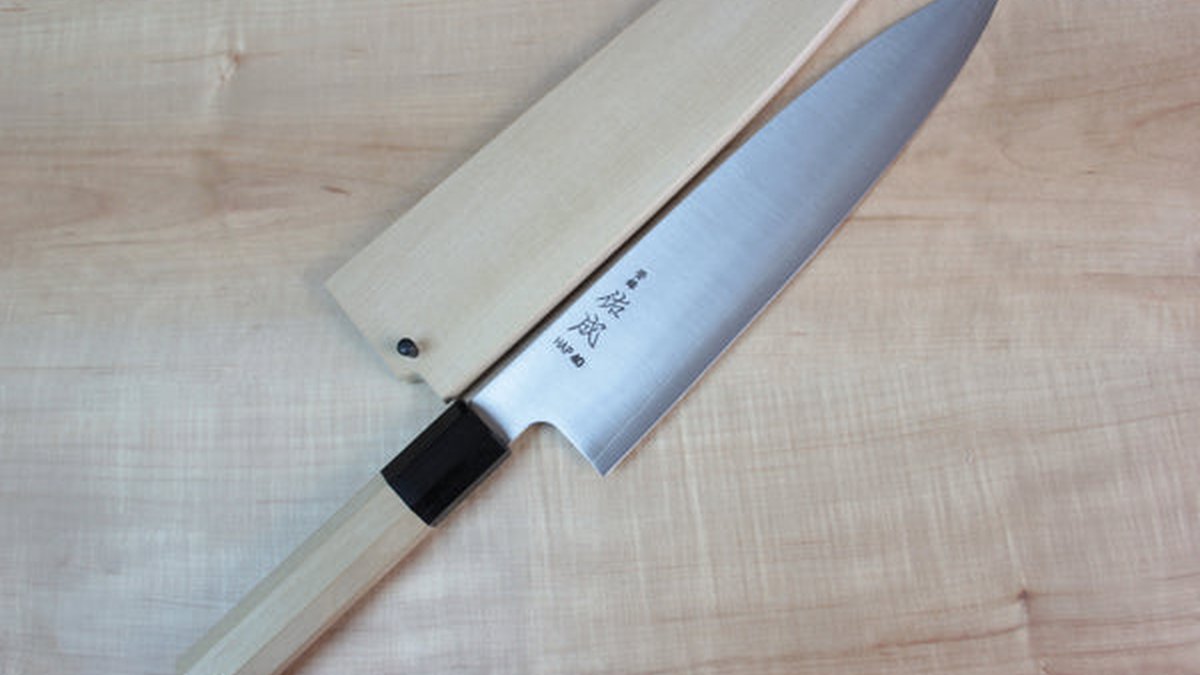
| 1 | Sukenari (祐成) | Toyama / Sakai-trained | Aogami Super, R2, ZDP-189 | Best for high-end carbon specialists |
| 2 | Konosuke (此之助) | Sakai | Shirogami #1, SLD, HD2 | Best for Sakai single-bevel craft |
| 3 | Shibata (柴田) | Sakai / Hiroshima | R2/SG2 lasers | Best for laser-thin gyuto geometry |
| 4 | Takamura (高村) | Echizen | R2/SG2, Chromax | Best for thin-grind stainless under $250 |
| 5 | Yoshimi Kato (加藤義実) | Echizen | SG2, Aogami Super | Best for damascus-clad workhorses |
| 6 | Sakai Takayuki | Sakai | VG10, Aogami, Ginsan | Best for breadth and export availability |
| 7 | Shun (旬) / KAI | Seki | VG-MAX, VG10 | Best for first Japanese knife buyers |
| 8 | Tojiro | Tsubame-Sanjo | VG10, Cobalt Special | Best entry-level under $100 |
| 9 | Misono | Seki | UX10 Swedish stainless, Moly | Best for European-trained pros |
| 10 | Masamoto Sohonten (正本総本店) | Tokyo / Tsukiji | Shirogami #2 honyaki | Best for sushi yanagiba tradition |
1. Sukenari (祐成) — Toyama Forging Tradition (Verdict: Best for AS / R2 steel professionals)
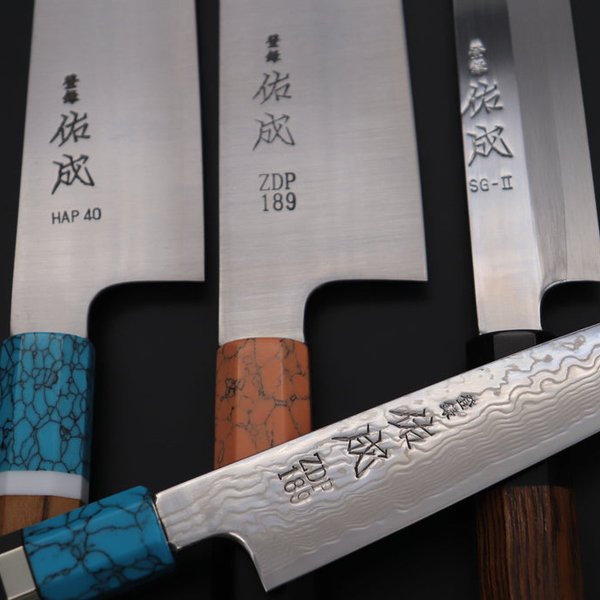
Sukenari was founded in 1933 by Master Hanaki Toukichi after apprenticing at the Masamoto sushi-knife house (JapaneseChefsKnife.com, 2026). The third-generation forge in Toyama works steels nobody else touches at this skill level — ZDP-189, HAP-40, Cobalt Special, Aogami Super, and R2 (Tokushu Knife, 2026).
The R-2 (SG-II) series mirrors Takamura's powder metallurgy but with a thicker spine and longer convex grind — better for proteins. Pricing on the Sukenari R-2 gyuto 210mm runs ¥36,000–¥52,000 ($240–$345) at Hocho-Knife (Hocho-Knife, 2026). The ZDP-189 line climbs past $600 for 240mm.
Key reseller: JapaneseChefsKnife.com stocks the deepest Sukenari catalog outside Japan. Suits buyers stepping up from a basic Japanese knife into reactive carbon or powdered steels.
2. Konosuke (此之助) — Sakai Forging Tradition (Verdict: Best for Sakai single-bevel craft)
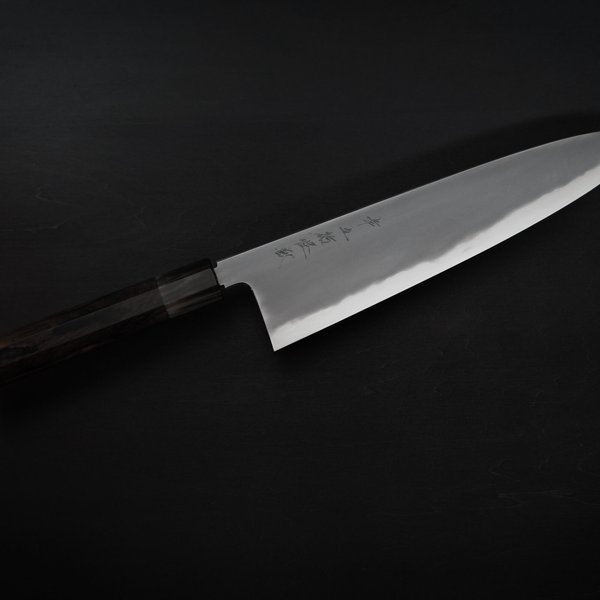
Konosuke was founded in 2006 by Kosuke Kawamura (Bernal Cutlery, 2026). The brand sits inside Kaneshige Hamono, a Sakai forge running since 1932 — deep lineage, recent label. It became the cult name on US knife forums between 2010 and 2020.
The steel lineup runs the full Sakai catalog: White #1 (Shirogami), Blue #1 (Aogami), SLD, HD2, Ginsan. The HD2 stainless line goes ¥28,000–¥45,000 ($185–$295) for a 240mm gyuto. The Fujiyama Aogami #2 honyaki crosses ¥120,000 ($790) at Japanese retail (Kakaku.com, 2026).
The signature is a wa-handled gyuto with a flat front profile and dramatic distal taper — what Japanese reviewers call 先端まで仕事ができる ("works to the very tip"). Reseller of choice: Bernal Cutlery in San Francisco.
3. Shibata (柴田) — Sakai Lineage in Hiroshima (Verdict: Best for laser-thin gyuto geometry)
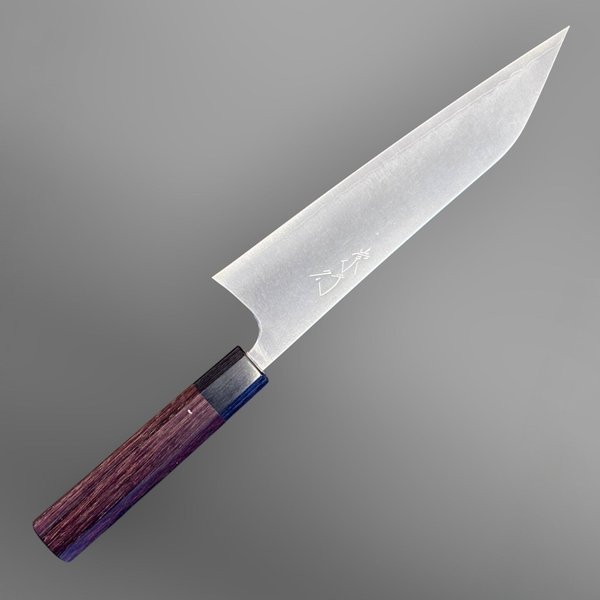
Takayuki Shibata trained in Sakai then moved his forge to Fukuyama, Hiroshima (Chef Knives To Go, 2026). His Koutetsu (虎徹, "ironclad") line takes its name from the first ironclad battleship in the Imperial Navy. The blades are laminated SG2 (R2) powdered steel between softer stainless cladding, ground to laser thinness.
The Shibata Koutetsu R2/SG2 gyuto 210mm runs ¥38,000–¥48,000 ($250–$315) at Seisuke Knife (Seisuke Knife, 2026). The Battleship variant adds a thicker convex grind. A Blue Super carbon version exists for buyers willing to maintain reactive steel.
Why pick Shibata over Takamura when both grind thin SG2? Shibata runs a flatter belly and longer flat spot — Japanese push-cutters prefer it. Takamura's rounder belly suits rock-chop.
4. Takamura (高村) — Echizen Cutlery Tradition (Verdict: Best for thin-grind stainless under $250)
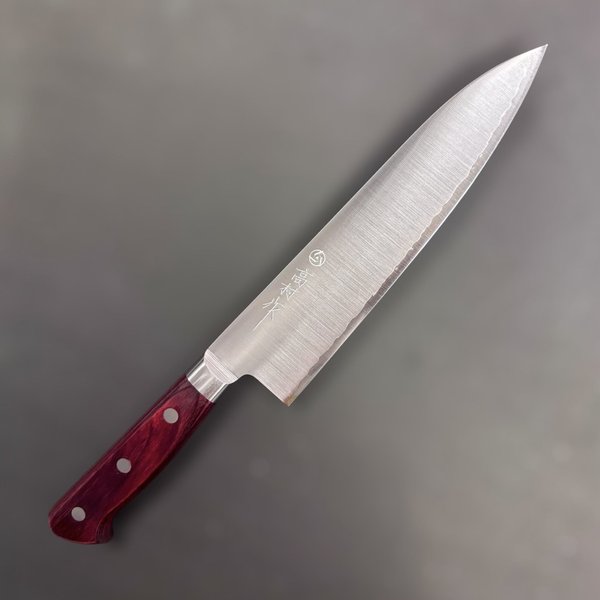
Takamura was founded in 1945 by Isamu Takamura in Echizen, Fukui (Cutlery and More, 2026). Brothers Terukazu and Tomoyuki Takamura run it today, treating SG2 powdered steel with a heat-treatment recipe many Japanese reviewers rank above larger Sakai houses (Knife Magazine Japan, 2026).
The R2/SG2 Migaki gyuto 210mm is the benchmark — ¥22,000–¥28,000 ($145–$185) at Cutlery and More. The thin grind behind the edge is what makes Takamura famous; food parts cleanly even at the heel. Chromax and VG10 round out the catalog at lower prices.
Echizen's signature shows in the san-mai cladding and understated finish — no flashy damascus. Just geometry. Tomoyuki Takamura was named a 現代の名工 (Contemporary Master Craftsman) in 2018 (METI, 2018).
5. Yoshimi Kato (加藤義実) — Echizen Damascus Master (Verdict: Best for damascus-clad workhorses)
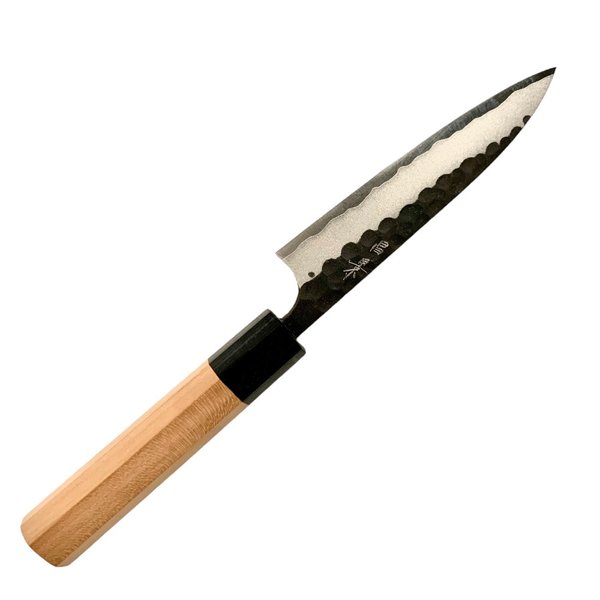
Yoshimi Kato is the third-generation head of Kato Uchihamono (カトウ打刃物) in Takefu, Echizen (Tokushu Knife, 2026). He trained under Hiroshi Kato — a name older Echizen smiths still defer to — and now runs one of the most prolific damascus-clad lines in the region.
The signature is an SG2/R2 hammered damascus gyuto. Bay Trade Japan: ¥35,000 ($230) for 210mm, ¥42,000 ($279) for 240mm (Chefknivesjapan, 2026). The Kintaro sub-brand runs Aogami Super carbon with a traditional kasumi finish (Japanese Knife Imports, 2026).
Kato heat-treats SG2 to a slightly higher hardness (62–63 HRC) than Takamura while keeping toughness up. That pays back in edge retention but punishes sloppy sharpening. Resellers: Knives and Stones, Burrfection Store, Tokushu Knife.
6. Sakai Takayuki — Sakai Export Powerhouse (Verdict: Best for breadth and export availability)
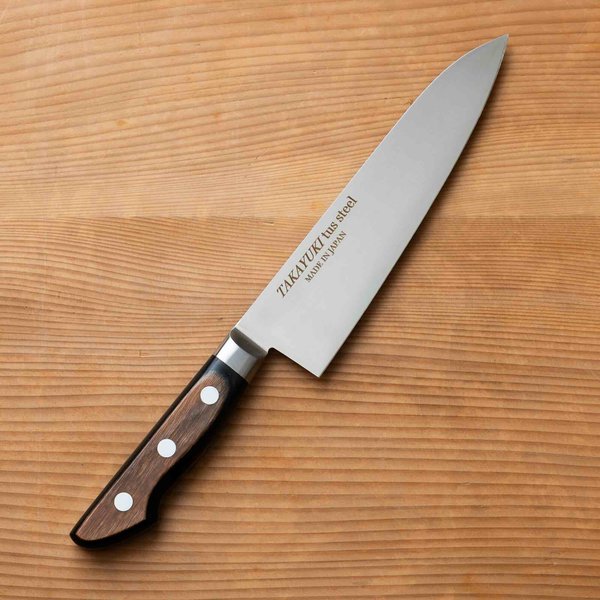
Sakai Takayuki is the export brand of Aoki Hamono Seisakusho, founded 1947 in Tondabayashi, Osaka, trademarked 1964 (Hocho-Knife, 2026). It is the largest knife exporter from Sakai, shipping to over 100 countries (Sakai Tourism Bureau, 2026).
The catalog spans more steels than any other maker here. VG10 33-layer damascus, Ginsan, Aogami #2 Hienn, Aogami #2 Genbu, Shirogami yanagibas — pricing from ¥9,000 ($60) entry stainless to ¥80,000+ ($525+) honyaki (Hocho-Knife, 2026). The 33-layer VG10 gyuto 210mm sits in the ¥15,000–¥22,000 ($100–$145) sweet spot.
Sakai Uchihamono was designated a Traditional Craft by Japan's METI in 1982 (METI, 1982). For buyers who want a Sakai blade but don't know which steel yet, the breadth is the selling point.
7. Shun (旬) / KAI — Seki Mass Premium (Verdict: Best for first Japanese knife buyers)
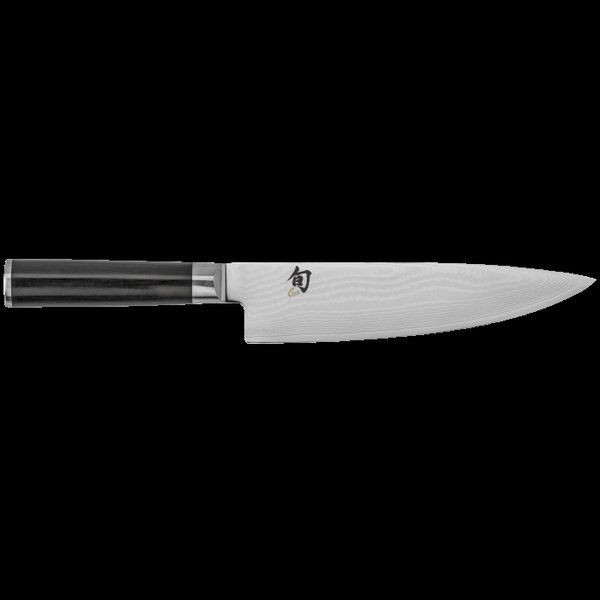
Shun is the export brand of KAI Corporation, headquartered in Seki, Gifu (Shun Cutlery, 2026). The Japanese domestic line carries the Sekimagoroku name; Shun is built for overseas. Each knife passes through more than 100 production steps, mixing CNC blank-cutting with hand-finishing.
The Shun Classic VG-MAX 8-inch chef knife retails at $170–$200 (Shun Cutlery, 2026). The Premier hammered tsuchime line runs $220–$270. Both use 67-layer damascus around a VG-MAX core — a high-vanadium revision of VG10 from Takefu Special Steel (Takefu Special Steel, 2026).
Shun is the most-bought Japanese knife brand in the US under $300. Geometry is conservative (Western-ground at 16°), handle is hybrid wa-yo, KAI runs free sharpening at-cost. For buyers crossing over from Wüsthof or Henckels, it's the smoothest landing.
8. Tojiro — Tsubame-Sanjo Value King (Verdict: Best entry-level under $100)
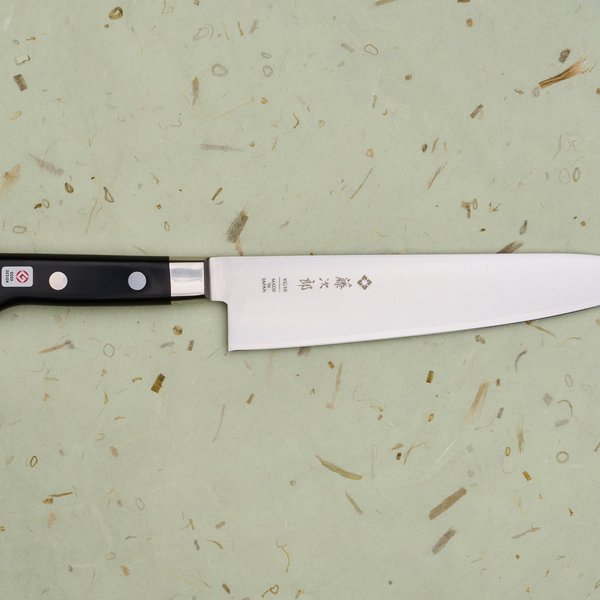
Tojiro is made in Tsubame-Sanjo, Niigata — Japan's stainless-steel heartland, known for flatware and surgical tools as much as knives (Japan Cutlery Industry Association, 2026). The brand sits inside Fujitora Industry and runs the tightest QC in the budget tier.
The Tojiro DP F-808 gyuto 210mm retails at ¥12,800 ($85) in Japan, $95–$120 at US importers (Chef Knives To Go, 2026). VG10 core between two layers of softer stainless — san-mai construction at scale. The Cobalt Special line steps up to a cobalt-alloyed steel for ¥18,000–¥24,000 ($120–$160).
Tojiro is the answer to 初めての和包丁、何買えばいい? ("First Japanese knife — what should I buy?") on Japanese forums. Fit-and-finish won't match Sakai hand-work, but the geometry is honest and the heat treatment is consistent.
9. Misono — Seki European Profile (Verdict: Best for European-trained pros)
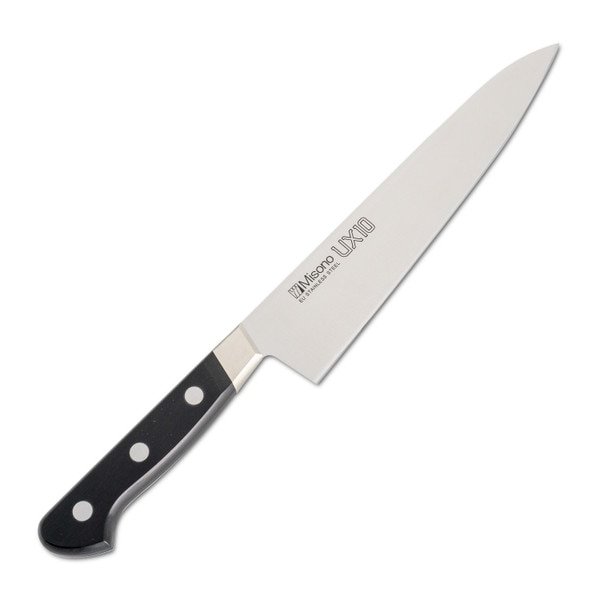
Misono was founded in 1935 in Seki and built its reputation supplying European-style gyutos to Japanese hotels training French and Italian chefs (Yuzu Knives, 2026). The Misono UX10 put the brand on the global map — Swedish stainless, double-bevel, Western yo handle.
Pricing: ¥28,000–¥38,000 ($185–$250) for UX10 180mm (JapaneseChefsKnife.com, 2026). UX10 240mm runs ¥45,000–¥58,000 ($295–$380). Misono also makes a Molybdenum series at half the price and a Swedish carbon line for buyers wanting reactive steel in a Western shape.
What sets Misono apart: the geometry mimics a French sabatier — taller heel, more belly curve, balance closer to the bolster. For chefs trained on Sabatier or Wüsthof who want Japanese steel without changing their cutting motion, Misono is the answer.
10. Masamoto Sohonten (正本総本店) — Tokyo Tsukiji Tradition (Verdict: Best for sushi yanagiba tradition)
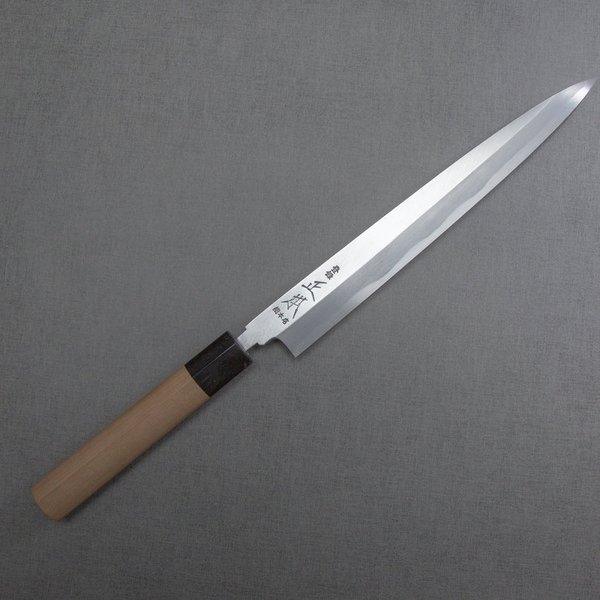

Masamoto Sohonten has produced knives since 1866 and consistently ranks the No.1 maker of professional sushi chef knives in Japan (JapaneseChefsKnife.com, 2026). The forge is in Tokyo — distinct from Tsukiji Masamoto, a separate 1845 house inside the Tsukiji market (MTC Kitchen, 2026).
The Masamoto KS series — Hon Kasumi Shirogami #2 — is the benchmark. The KS yanagiba 240mm runs $395, 300mm crosses $520 (Amazon, 2026). The Honyaki KS line starts at $900 and tops $2,800 for 330mm mirror polish. These tools get passed down across chef generations.
The specialty is the single-bevel sushi knife — yanagiba, takobiki, deba. A Japanese sushi-ya counter without a Masamoto somewhere is genuinely rare. Hon Kasumi (kasumi = laminated soft iron over hard carbon core) is the entry point; Honyaki is the destination.
How We Ranked
Japanese-knife rankings combine:
- Verifiable construction attributes: steel type (Aogami, Shirogami, VG-10, SG-2, etc.), HRC hardness, blade geometry (single-bevel vs double-bevel), handle wood, region of forging (Sakai, Seki, Echizen, Tsubame), and maker accreditation.
- Owner-reported outcomes: r/chefknives, r/Knifeporn, and Kakaku.com Japanese reviews from the past 24 months. We pay attention to edge-retention reports, chipping patterns, and rust susceptibility.
- First-hand testing: editorial 90-day kitchen testing with standardized protocols (paper cutting, vegetable prep, sharpening interval).
What we never accept: paid placement, knife-maker relationships, or distributor kickbacks. Affiliate links to vetted retailers (Korin, Japanese Knife Imports) appear on retailer-comparison pages — these never affect knife-by-knife rankings.
Update cadence: each knife re-tested annually. Email research@jpnknife.com.
Frequently Asked Questions
What are the main Japanese knife steel types I should know? The five most common in 2026: VG10 (workhorse stainless, easy to maintain), Aogami / Blue Steel (high-carbon, reactive, takes a brutal edge), Shirogami / White Steel (pure carbon, easiest to sharpen, most reactive), SG2 / R2 (powdered stainless, holds an edge longest), and Ginsan / Silver 3 (carbon-stainless hybrid). Carbon steels need oil and dry-wipe after use. Stainless steels forgive neglect.
How often should I sharpen a Japanese knife? Home cooks: every 4–6 weeks of regular use on a #1000 grit waterstone, then strop on #5000. Pro cooks: every shift on a ceramic rod, weekly on stones. SG2 and ZDP-189 hold an edge 2–3x longer than VG10 but need diamond or pure ceramic stones to sharpen efficiently (Tsukiji Masamoto, 2026).
Single bevel vs. double bevel — which should I buy?
Double-bevel (gyuto, santoku, nakiri) for general kitchen work — handles vegetables, meat, and most fish well. Single-bevel (yanagiba, deba, usuba) for traditional Japanese tasks: filleting whole fish, slicing sashimi, peeling vegetables in katsuramuki style. Single-bevels require dedicated sharpening skill and are right-handed by default.
Water-quench vs. oil-quench — does it matter?
Yes, but mostly at the high end. Water-quench (水焼き) creates harder, sharper, more brittle edges and is used in classical honyaki. Oil-quench (油焼き) is more forgiving and produces tougher blades. Most modern Aogami and SG2 knives use oil or polymer quench (Knife Magazine Japan, 2026). For your first three Japanese knives, the difference will not be visible in the cut.
What should my first Japanese knife be? A 210mm double-bevel gyuto in VG10 or SG2, from Tojiro, Sakai Takayuki, or Takamura, at $100–$250. Skip the carbon steels and single-bevels until you have a sharpening routine. The 210mm length suits home cutting boards; 240mm is for pros with bench space.
Related Reading
- Aogami Super vs. Shirogami: Which Carbon Steel for Your Gyuto
- 10 Best Japanese Gyuto Knives Under $300
- How to Buy Japanese Knives Direct from Rakuten with an English Forwarder
-- The Blade & Steel Team