Top 10 Japanese Knife Shapes Compared: Gyuto, Santoku, Yanagiba, Nakiri (2026)
Japanese kitchen knives split into roughly ten shapes, each tuned for a narrow task. Pick by what you actually cook, not by what looks coolest on the magnet bar.
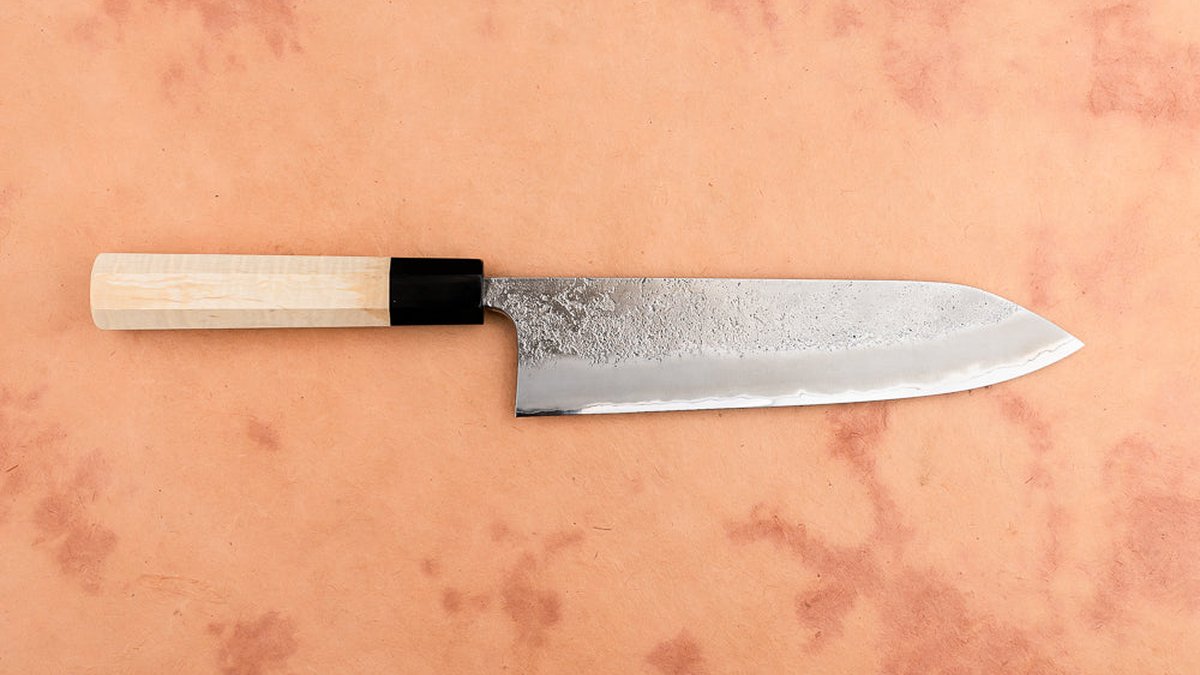
Quick Answer
- Gyuto is the safest first Japanese knife for Western cooks
- Single-bevel blades (yanagiba, deba) demand stone sharpening skill
- Nakiri beats santoku for pure vegetable push-cutting
- Bunka and kiritsuke add a k-tip for fine board work
Japanese kitchen knives split into roughly ten shapes, each tuned for a narrow task. Pick by what you actually cook, not by what looks coolest on the magnet bar.
| Rank | Knife Shape | Length | Best Use | Verdict |
|---|---|---|---|---|
| 1 | Gyuto (牛刀) | 210-270mm | All-purpose Western chef work | First Japanese knife to buy |
| 2 | Santoku (三徳) | 165-180mm | Home all-purpose | Best for small kitchens |
| 3 | Nakiri (菜切) | 165-180mm | Vegetable push-cutting | Vegetable specialist's pick |
| 4 | Petty (ペティ) | 80-150mm | Utility, peeling, garnish | Essential second knife |
| 5 | Sujihiki (筋引) | 240-300mm | Slicing roasts and proteins | Best Western-style slicer |
| 6 | Yanagiba (柳刃) | 270-300mm | Sashimi single-stroke slicing | Sushi specialist required |
| 7 | Deba (出刃) | 150-180mm | Fish butchery, breaking down | Heavy fish work only |
| 8 | Bunka (文化) | 165-180mm | Home chef with k-tip | Modern santoku upgrade |
| 9 | Kiritsuke (切付) | 240-270mm | Executive chef status blade | Skilled cooks only |
| 10 | Honesuki (骨スキ) | 135-150mm | Poultry boning | Whole-bird butchery |
How We Compared These Shapes
Western knives chase versatility. Japanese kitchens take the opposite stance — a knife exists for one job, and it does that job better than any generalist can.
Korin's Japanese Knife FAQ (2026) walks through the trade-offs, and Knifewear's k-tip shape primer (2026) covers the modern hybrids. For a Western home cook, you don't need ten blades. You probably need three.
1. Gyuto (牛刀) — Western Chef's Knife Equivalent (Verdict: Best all-purpose first Japanese knife)
Kanji: 牛刀 (gyū-tō, "cow sword" — originally for beef butchery) Typical length: 210mm, 240mm, 270mm Bevel: Double bevel, usually 50/50 or 70/30 right-handed Best use: Meat, fish, vegetables, herbs — anything a Western chef's knife handles
The gyuto is the Japanese answer to a German chef's knife. Korin's gyuto category (2026) carries blades from $90 to $1000+.
Compared to a Wüsthof, the gyuto runs thinner behind the edge and harder on the Rockwell scale (60-63 HRC versus 56-58 HRC). That delivers cleaner cuts on tomatoes but punishes contact with bone.
A 240mm with a Wa handle in Aogami #2 hits the sweet spot at $200-350. America's Test Kitchen's best gyuto review (2026) is worth reading before you commit.
2. Santoku (三徳) — Three Virtues Generalist (Verdict: Best for small kitchens and Western converts)
Kanji: 三徳 (san-toku, "three virtues" — fish, meat, vegetables) Typical length: 165-180mm Bevel: Double bevel, 50/50 Best use: Compact all-purpose home cooking
The santoku was invented in the 1940s as a home-friendly hybrid between a nakiri and a gyuto. Knifewear's santoku guide (2026) translates the name as "three virtues" — meat, fish, and vegetables — or alternatively, "three cutting techniques."
The flatter belly favors push-cuts and chops over the rocking motion you'd use on a curved gyuto. The shorter length (165-180mm versus 240mm on a typical gyuto) makes it easier on a 12-inch cutting board, which is why it dominates Japanese home kitchens.
Steel choice ranges widely. VG-10 stainless from Shun or Misono runs $130-180 and shrugs off salt. Aogami Super clad models from Yoshihiro or Masakage hit $250-400 but demand hand-drying.
For a small apartment kitchen, the santoku often beats the gyuto outright. Knifewear's santoku vs gyuto comparison (2026) lays out the trade-off cleanly.
3. Nakiri (菜切) — Vegetable Cleaver (Verdict: Vegetable specialist's pick)
Kanji: 菜切 (na-kiri, "leaf cutter") Typical length: 160-180mm Bevel: Double bevel, usually 50/50 at 15-16° per side Best use: Vegetables, herbs, board-only work
The nakiri is the double-bevel home version of the traditional single-bevel usuba. Flat profile, square nose, no rocking motion — the blade drops cleanly through onions, cabbage, and daikon without that final connecting hinge of skin you fight on a curved blade.
MTC Kitchen's nakiri lineup (2026) shows the range. The Sakai Takayuki PRO VG-5 in 175mm weighs 205g at 59 HRC, while Yoshimi Kato's Aogami Super Kurouchi in 165mm comes in lighter at 172g and harder at 64 HRC. Spine thickness typically runs 2-3mm tapering to a near-zero edge.
Price spans $90 (entry-level VG-10) to $400 (mid-tier handmade Masamoto or Yoshihiro). For anyone who chops a lot of vegetables — Korean banchan prep, mirepoix, stir-fry mise — the nakiri is more efficient than any gyuto.
It's a poor traveling companion, though, because it won't slice a brisket or fillet a fish.
4. Petty (ペティ) — Utility and Paring (Verdict: Essential second knife)
Kanji: ペティ (peti, loaned from French "petit") Typical length: 80-90mm (small) or 120-150mm (large) Bevel: Double bevel, 50/50 Best use: Peeling, garnish work, small produce, board cleanup
Petty is the Japanese take on a Western paring or utility knife. Bernal Cutlery's petty collection (2026) notes that 80-90mm sizes excel at in-hand peeling and tip work, while 150mm blades function as a mini-gyuto for line stations.
Most home cooks want a 135-150mm petty as the second knife after a gyuto or santoku. It handles shallots, garlic, citrus supremes, and trimming fat off a steak without dragging out the big blade. Chubo Knives' petty guide (2026) breaks down the size ranges in more detail.
Steel options mirror the gyuto market. A Misono UX10 petty runs about $130. An Aogami Super wa-handle petty from Konosuke or Takamura pushes $250-300.
For most kitchens, a stainless petty around $100 is the right call.
5. Sujihiki (筋引) — Long Western-Style Slicer (Verdict: Best Western-style slicer for proteins)
Kanji: 筋引 (suji-hiki, "muscle puller") Typical length: 240-300mm Bevel: Double bevel, 50/50 or 70/30 Best use: Brisket, roasts, salmon, prosciutto — clean uninterrupted slices
The sujihiki is the double-bevel Western-friendly version of the yanagiba. Chubo Knives' sujihiki guide (2026) describes it as a long, narrow slicer with blade widths of 1.5-3mm — ideal for single-stroke pulls through cooked proteins.
A 270mm sujihiki in Ginsan-ko or SG2 powder steel runs $180-450 and outperforms any Western carving knife.
For home BBQ work, a 240mm sujihiki is a quiet upgrade most people don't realize they need. If you cook large proteins more than twice a month, it earns drawer space.
6. Yanagiba (柳刃) — Sashimi Single-Bevel Slicer (Verdict: Sushi specialist required for raw fish)
Kanji: 柳刃 (yanagi-ba, "willow blade") Typical length: 240-300mm Bevel: Single bevel, ground on the right side (left-handed versions cost 20-40% more) Best use: Sashimi, sushi, single-stroke slicing of raw fish
The yanagiba is the defining knife of the Edomae sushi tradition. Single bevel, ground only on the right, with a flat back (urasuki) that produces glass-clean cuts on raw tuna or salmon. JIKKO Cutlery's yanagiba guide (2026) recommends 270-300mm for professionals and 210-240mm for home use.
You pull the blade in one continuous stroke from heel to tip. Sawing tears the fish and creates a frosted surface that ruins the visual. That stroke is also why the blade runs so long — a 30cm yanagi finishes a tuna fillet without resetting.
Steel pairing is typically Shirogami #2 or #3 with a soft iron jigane cladding. Hardness sits around 61-63 HRC. Sakai Ichimonji Mitsuhide's yanagiba collection (2026) starts around $250 and climbs past $2000 for famous smiths.
Skip this knife unless you cut raw fish weekly and own a 1000/6000 stone.
7. Deba (出刃) — Fish Butchery Cleaver (Verdict: Heavy fish work only, not general purpose)
Kanji: 出刃 (de-ba, "protruding blade") Typical length: 150-180mm (165mm most common for home) Bevel: Single bevel, right-handed standard Best use: Breaking down whole fish, cutting through small bones and heads
The deba is the heaviest single-bevel knife in the Japanese kitchen. Thick spine (4-9mm), short blade, and enough mass to cleave through a snapper head or salmon collar.
Sakurajapaneseknife's deba guide (2026) details how the heel handles fin removal while the belly portion separates fillets. Korin's deba category (2026) carries the standard sizes.
This is not a chef's knife substitute. The single bevel makes vegetable work clumsy, but for anyone who breaks down whole fish, there is no replacement.
A 165mm Shirogami #2 deba from a Sakai maker runs $180-300.
8. Bunka (文化) — K-Tip Hybrid (Verdict: Modern santoku upgrade with reverse tanto)
Kanji: 文化 (bun-ka, "culture") Typical length: 165-180mm Bevel: Double bevel, 50/50 Best use: All-purpose home work with added tip precision
The bunka is essentially a santoku with a reverse-tanto k-tip. Knifewear's k-tip explainer (2026) calls it a more aggressive chef's knife that combines a nakiri's flat edge with a kiritsuke's pointed tip.
That tip is the differentiator. A traditional santoku has a rounded sheepsfoot tip that limits fine work — separating tendon, scoring skin, cutting parchment. A bunka's k-tip handles those tasks without forcing you to grab a petty.
Bunkas are the trendy home-cook pick from makers like Yoshimi Kato, Mazaki, and Myojin. Price runs $200-500 for Aogami Super or SG2 builds.
9. Kiritsuke (切付) — Executive Chef's Status Blade (Verdict: Skilled cooks only)
Kanji: 切付 (kiri-tsuke, "cut and attach") Typical length: 240-330mm (270mm most popular) Bevel: Traditionally single bevel; modern double-bevel "kiritsuke gyuto" common Best use: Combined yanagi and usuba duties for a head chef
The traditional kiritsuke is a single-bevel blade reserved for executive chefs in formal Japanese kitchens. Korin's kiritsuke category (2026) explains the symbolism — it functions as both a fish slicer (yanagi role) and vegetable cutter (usuba role), so only a chef trusted with both stations carries one.
The sword-shaped profile with its angular tip is unmistakable. Single-bevel versions demand the same urasuki maintenance and right-hand commitment as a yanagiba, plus the wider profile makes them harder to control. Koi Knives calls it Japan's most intimidating kitchen knife (2026) for good reason.
Most Western buyers want a "kiritsuke gyuto" — a double-bevel chef's knife with the kiritsuke profile, running $250-600. Skip the true single-bevel kiritsuke unless you've mastered a yanagiba first.
10. Honesuki (骨スキ) — Poultry Boning Triangle (Verdict: Whole-bird butchery specialist)
Kanji: 骨スキ (hone-suki, "bone separator") Typical length: 135-150mm Bevel: Often single bevel; double-bevel versions common Best use: Breaking down whole chicken, duck, turkey
The honesuki is the rigid triangular knife designed for deboning poultry. Bernal Cutlery's honesuki page (2026) and Kasumi Japan's honesuki collection (2026) describe its reverse-tanto tip as a tool for piercing skin at joints and tracing along bone.
Blade height stays narrow but the spine is thick — typically 3-4mm — for prying joints apart. It excels at separating wings, legs, and breasts from a whole bird with zero wasted meat. With practice you can break down a chicken in under two minutes.
A 145mm honesuki in VG-10 runs $90-150. Carbon versions from Hitohira or Masamoto push $200-300.
For anyone who buys whole birds, it's the cleanest tool for the job. Don't use it on bone splits; it'll chip.
Frequently Asked Questions
Q: Which Japanese knife should I buy first? A: A 210mm or 240mm double-bevel gyuto in stainless steel like VG-10 or Ginsan. It handles 80 percent of Western kitchen tasks and teaches you the lighter, thinner feel of Japanese geometry before you commit to a specialist.
Q: What's the real difference between a santoku and a nakiri? A: A santoku has a slightly curved belly and a sheepsfoot tip, so it handles meat and fish along with vegetables. A nakiri is flat-edged with a square nose, optimized purely for vegetable push-cuts. If you chop primarily vegetables, the nakiri is faster.
Q: Do I need a single-bevel knife as a home cook? A: Probably not. Single-bevel yanagiba, deba, and usuba demand stone sharpening skill (urasuki maintenance), commit you to right-handed use, and only outperform double-bevel knives on their specific task. Stick to double-bevel unless you cut raw fish weekly.
Q: How much should I spend on my first Japanese knife? A: $150-300 hits the right balance. Below $100 you're in entry-level stainless territory. Above $500 you're paying for smith reputation and handle materials more than cutting performance. Mid-tier Sakai makers in Aogami #2 or SG2 deliver the most value.
Q: Why are wa handles octagonal? A: The eight flat surfaces provide tactile feedback so you know blade orientation without looking, and they grip securely when wet without forcing a tight clamp. The forward balance from a hidden tang construction also lets the blade do the work.
Related Reading: For the smiths behind these shapes, see our top 10 Japanese knife makers from Sakai and Seki guide. For steel choices, read our Japanese knife steels compared breakdown.
-- The Blade & Steel Team