Top 10 Japanese Whetstones Compared: Naniwa, Shapton, King, Suehiro (2026)
Japanese sharpening stones split into two families. Water stones (砥石, toishi) — King, Shapton, Naniwa, Suehiro — flush their abrasive slurry with water and cut faster than oilstones. Oil stones are rare in Japan; the modern bench standard is the water stone, either soaking (shasui) or splash-and-go (Sharpening Supplies, 2026).
Quick Answer
- Shapton Pro 1000 is the best splash-and-go workhorse around $48.
- King 1000/6000 combo is the classic $47 starter for soakers.
- Naniwa Super Stone 5000 finishes to a mirror at roughly $60.
- Atoma 400 diamond plate flattens every other stone on this list.
Disclosure: this article contains affiliate links — we may earn a commission on qualifying purchases at no extra cost to you.
Last updated: May 2026
Affiliate disclosure: The Blade & Steel desk earns a small commission on qualifying purchases. Pricing referenced from Korin, Japanese Knife Imports, Chef Knives To Go, Cutlery and More, and MTC Kitchen at May 2026 USD rates. No AI image generation — every grit number cross-checked against the manufacturer datasheet.
Japanese sharpening stones split into two families. Water stones (砥石, toishi) — King, Shapton, Naniwa, Suehiro — flush their abrasive slurry with water and cut faster than oilstones. Oil stones are rare in Japan; the modern bench standard is the water stone, either soaking (shasui) or splash-and-go (Sharpening Supplies, 2026).
Grit numbers follow the JIS R 6010 scale. A #1000 stone removes a working edge, #3000-#5000 refines it, and #6000-#8000 polishes for kasumi or razor finish (Suehiro, 2026). Ceramic-bonded stones wear slowly. Natural stones (tennen toishi) cost more, dish faster, and require a flattening plate every few sessions.
At a Glance: All 10 Stones Compared
| Rank | Stone | Grit | Type | Verdict |
|---|---|---|---|---|
| 1 | Shapton Pro 1000 (Kuromaku Orange) | 1000 | Splash-and-go ceramic | Best splash-and-go workhorse |
| 2 | Naniwa Professional 800 (Chosera) | 800 | Splash-and-go magnesia | Best edge-setting stone |
| 3 | King 1000/6000 Combo (KW-65) | 1000/6000 | Soaking dual-grit | Best starter combo under $50 |
| 4 | Suehiro Cerax 1000 | 1000 | Short-soak ceramic | Best feedback for freehand |
| 5 | Shapton Glass 1000 HR | 1000 | Splash-and-go glass-backed | Best for very hard steels |
| 6 | Naniwa Super Stone 5000 | 5000 | Splash-and-go resin | Best mirror finisher |
| 7 | King Deluxe 6000 | 6000 | Soaking polishing | Best budget polishing stone |
| 8 | Shapton Kuromaku 5000 (Melon) | 5000 | Splash-and-go ceramic | Best mid-to-fine refiner |
| 9 | JNS 6000 Matukusuyama | 6000 | Splash-and-go | Best for kasumi contrast |
| 10 | Atoma 400 Diamond Plate | 400 | Diamond flattener | Best flattening plate, period |
1. Shapton Pro 1000 (Kuromaku Orange) — The Splash-and-Go Workhorse (Verdict: Best all-around medium stone for most home cooks)
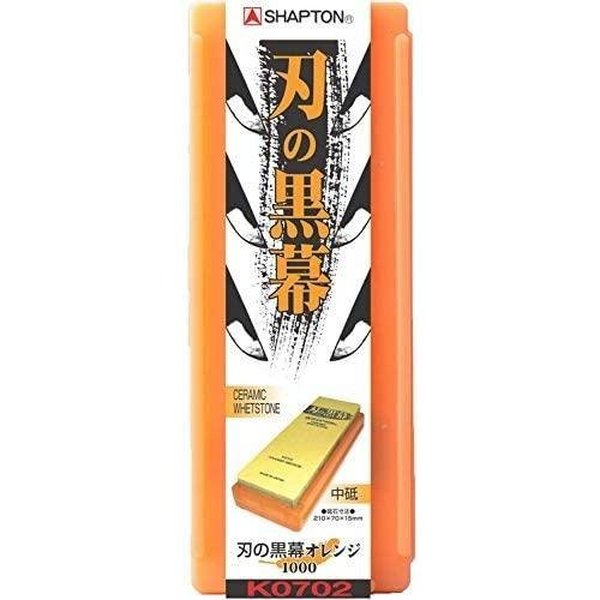
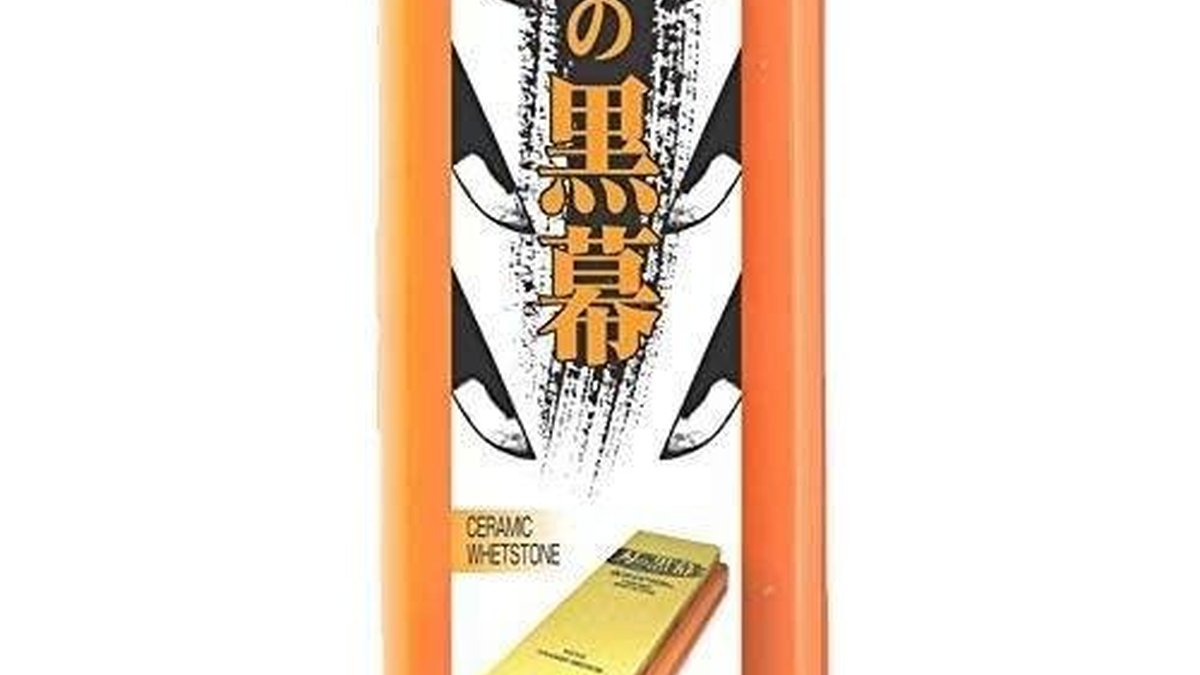
The Shapton Kuromaku 1000 — called "Shapton Pro" outside Japan and worn in an orange case — is the default recommendation across most US knife retailers. The Kuromaku line was the world's first color-coded grit system (Hocho-Knife, 2026).
It is splash-and-go: no 10-minute soak, no slurry to manage. The ceramic binder cuts very fast on hard Japanese steels (Shirogami, Aogami, R2, SG2) and wears slowly, so it stays flat through dozens of sessions (Chef Knives To Go, 2026). Feedback is firm — closer to glass than mud.
Pricing in the US sits around $48 at Chef Knives To Go and MTC Kitchen (MTC Kitchen, 2026). The included case doubles as a non-slip base. Ideal use: maintenance sharpening every 2-4 weeks for a working kitchen knife.
2. Naniwa Professional 800 (Chosera) — The Edge-Setting King (Verdict: Best for repairing damage and resetting bevels)
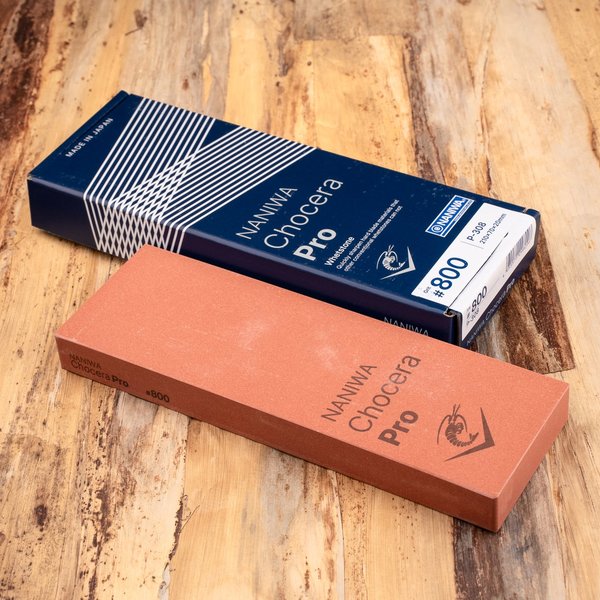
The Naniwa Professional 800 — still sold under its older "Chosera" name at some shops — is the stone reviewers credit with setting the modern edge-repair standard. It uses a magnesia binder with high abrasive density, which removes steel fast without dishing quickly (Burrfection Store, 2026).
It is splash-and-go. The 800 grit position is unusual; most ranges jump from 400 to 1000. The extra grit at 800 means you can repair a chip and move straight to a #3000 or #5000 finisher without an intermediate stone (Sharpening Supplies, 2026).
US pricing runs about $95-110 (Chef Knives To Go, 2026). It refines above its grit rating, leaving a near-1500 polish. Ideal use: edge repair, chip removal, and first-pass sharpening on a very dull knife.
3. King 1000/6000 Combo (KW-65) — The Classic Starter (Verdict: Best one-stone setup for under $50)
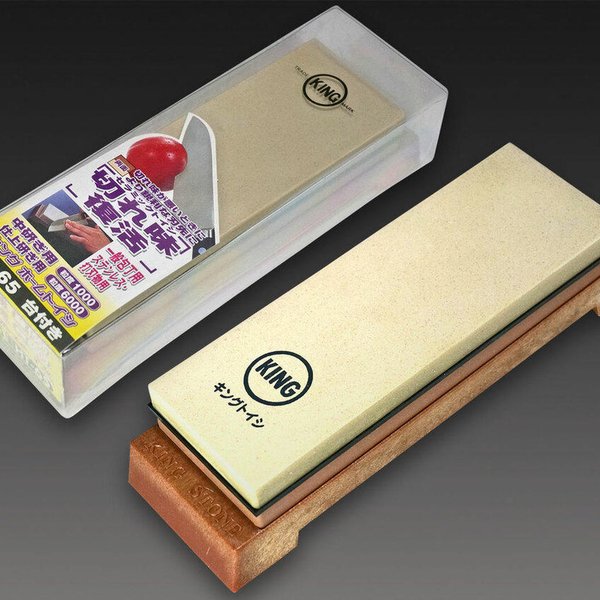
The King KW-65 is the stone most Japanese cooks learned on. It's a soaking dual-grit combo — #1000 on one face for sharpening, #6000 on the other for polishing — and it has been sold essentially unchanged since the 1970s (Japanese Knife Imports, 2026).
Soak it for 10-15 minutes before use. The binder is softer than Shapton or Naniwa, which means it dishes faster and needs a flattener every few sessions — but the slurry it generates gives excellent feedback for beginners (Oishya, 2026).
Pricing is $47 at Japanese Knife Imports and on Amazon, often bundled with a plastic base (Korin, 2026). Ideal use: your first whetstone, a travel setup, or a backup at the cabin.
4. Suehiro Cerax 1000 — The Feedback Champion (Verdict: Best feel for freehand sharpeners)
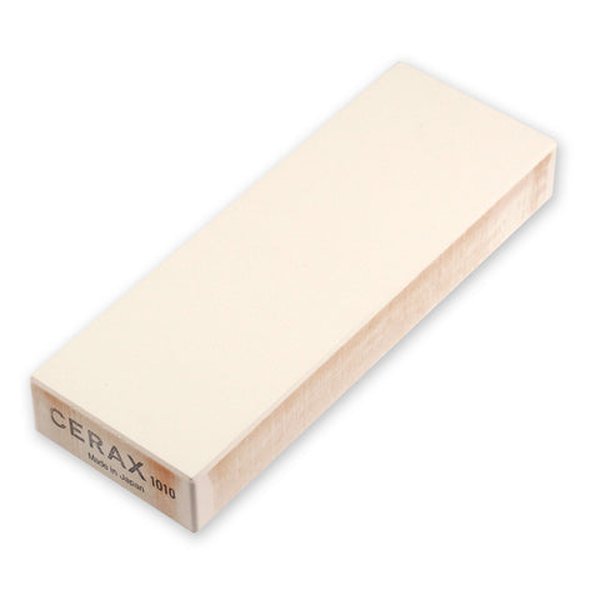
The Suehiro Cerax 1000 — model 1010 — is a short-soak ceramic stone (5 minutes max, or splash-and-go with a wet surface) that develops a rich slurry as you sharpen. That slurry is the selling point: the stone gives more "feedback" than Shapton or Naniwa, letting you feel the burr form (Tokushu Knife, 2026).
Cut speed is fast for a #1000. The Cerax binder is harder than King but softer than Shapton, so it sits in a sweet spot for freehand sharpeners who want tactile information from the stone (Burrfection Store, 2026).
US pricing varies wildly — between $45 and $65 depending on retailer (Chef Knives To Go, 2026). The Suehiro factory in Osaka has run since 1948. Ideal use: cooks moving past the King who want better feedback before jumping to splash-and-go.
5. Shapton Glass 1000 HR — The Hard-Steel Specialist (Verdict: Best for powder steels and stainless monsters)
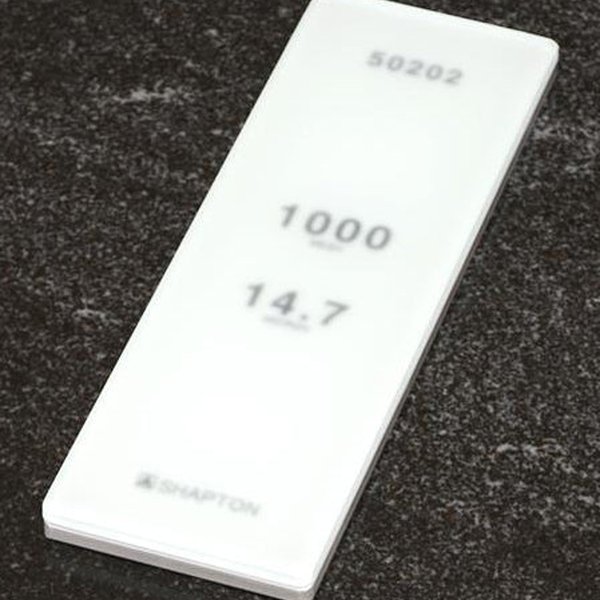
The Shapton Glass HR series fuses a 5mm ceramic stone to a 5mm glass backing plate. The result is the hardest medium-grit stone on the market and the only #1000 that cuts efficiently on modern powder steels like R2, SG2, and ZDP-189 (Sharpening Supplies, 2026).
It is splash-and-go and almost never dishes. The HR (high resolution) revision tightened the grit distribution, leaving a more uniform scratch pattern than the original Glass series (Rob Cosman, 2026). Particle size is 14.7 microns.
Pricing runs $80-95 for the standard 5mm thickness (Chef Knives To Go, 2026). Ideal use: sharpening high-vanadium stainless (SG2, R2, ZDP-189) or anything above 64 HRC where Shapton Pro starts to glaze.
6. Naniwa Super Stone 5000 — The Mirror Finisher (Verdict: Best polishing stone under $80)
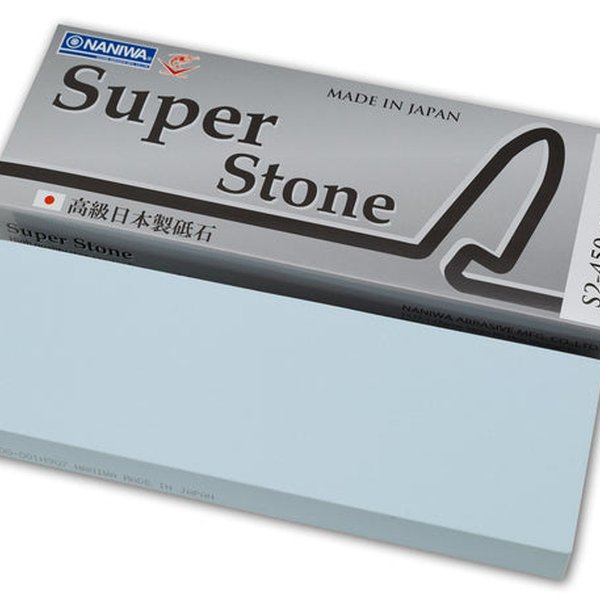
The Naniwa Super Stone 5000 is a resin-bonded splash-and-go finisher that leaves a mirror-shiny edge well above its rated grit. Reviewers consistently call it "shinier than other 5000 stones" (Chef Knives To Go, 2026).
The resin binder is softer than ceramic, so the stone releases fresh abrasive quickly. This is splash-and-go only — never soak a Super Stone, it will crack (Paul's Finest, 2026). Use after a #1000 or #2000 stone for a polished edge that holds longer than a hazy finish.
Pricing is about $60 at most US retailers (Sharp Edge, 2026). Ideal use: final stone in a 2-stone progression (1000 → 5000) for kitchen knives.
7. King Deluxe 6000 — The Budget Polisher (Verdict: Best soaking finisher for under $50)
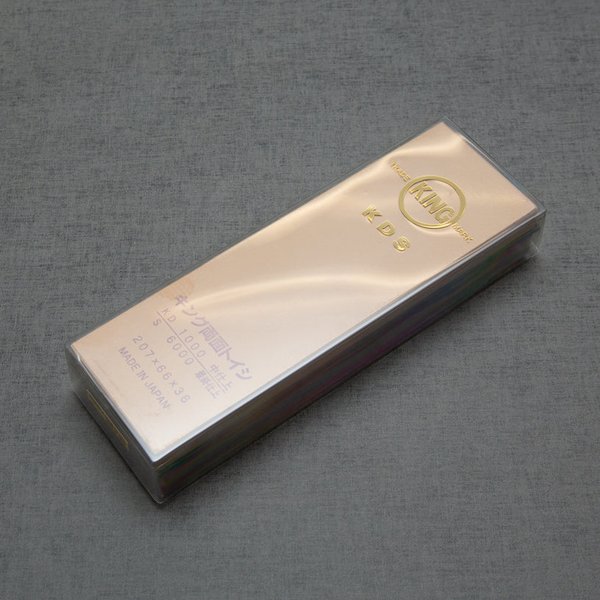
The King Deluxe 6000 is the standalone version of the 6000 face on the KW-65 combo. It is a soaking stone — 10-15 minutes in water before use — built with aluminum oxide particles in a clay matrix (Amazon, 2026).
The binder is soft. It dishes faster than ceramic or resin stones and needs flattening every 3-4 sessions. But the price is unbeatable: most US retailers list it around $45 (Chef Knives To Go, 2026). The slurry is heavy and gives a hazy kasumi finish rather than mirror polish.
The Matsunaga Stone Works factory in Osaka has produced King stones since the 1940s. Ideal use: budget polishing stone for traditional carbon knives (Shirogami, Aogami) where a softer slurry actually helps the kasumi contrast.
8. Shapton Kuromaku 5000 (Melon) — The Mid-to-Fine Refiner (Verdict: Best follow-up to a Shapton Pro 1000)
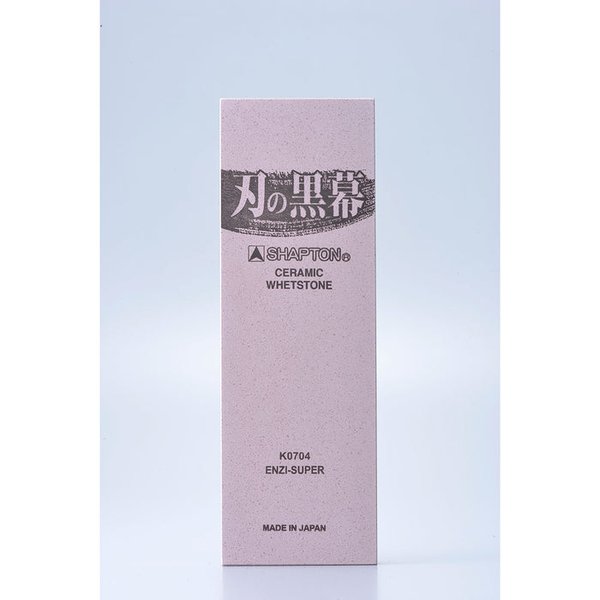
The Shapton Kuromaku 5000 — in a melon-green case — pairs naturally with the Pro 1000. Same splash-and-go ceramic, same case-as-base design, same minimal dishing (Hocho-Knife, 2026). Stepping from 1000 → 5000 is a single jump most kitchen knives respond well to.
The 5000 cuts faster than competing finishers because the abrasive concentration is high and the binder is hard. It produces a satin polish rather than a full mirror — Naniwa Super Stone 5000 polishes shinier — but the edge holds longer because the scratches are uniform (Sharpening Supplies, 2026).
US pricing sits around $55-65 (Globalkitchen Japan, 2026). Ideal use: the second stone in a Shapton-only progression for cooks who want consistency across their kit.
9. JNS 6000 Matukusuyama — The Kasumi Specialist (Verdict: Best for traditional single-bevel knives)
The JNS 6000 — built for Japanese Natural Stones.com in Denmark — is a splash-and-go synthetic designed to mimic a soft natural finishing stone (JapaneseNaturalStones.com, 2026). It is the regular finishing stone in the Shigefusa workshop family's setup, which is the closest thing to an industry endorsement a synthetic can get.
It removes all scratches from a #1000 and leaves a high-contrast kasumi finish between the soft iron jigane and hard steel hagane on traditional single-bevel knives (yanagiba, deba, usuba). The contrast is what sushi chefs are paying for (JapaneseNaturalStones.com, 2026).
Pricing runs about €85-105 (~$95-115 USD) shipped from Denmark. Ideal use: finishing stone for traditional single-bevel knives where kasumi contrast matters more than mirror polish.
10. Atoma 400 Diamond Plate — The Flattening Standard (Verdict: Best flattening plate for any whetstone setup)
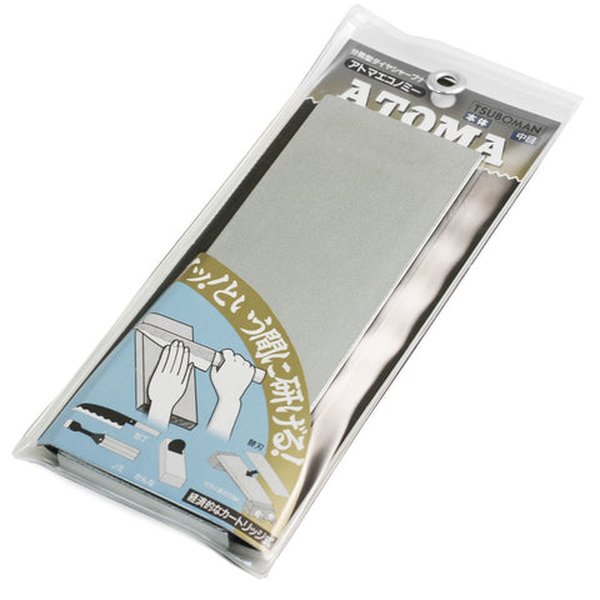
The Atoma 400 is not a sharpening stone — it's the diamond plate every other stone on this list needs. Every water stone dishes with use. A dished stone produces a curved edge. The Atoma 400 flattens the surface in about 30 seconds (Cutlery and More, 2026).
It is industrial diamonds bonded to a stainless steel plate, 210mm × 75mm × 12mm, weighing 541g. The diamond layer is replaceable — when it wears out (about 5 years of household use), Atoma sells the top surface as a sticker-on refill for a fraction of the new plate price (Sharpening Supplies, 2026).
US pricing is $110-130 (Chef Knives To Go, 2026). At 400 grit it can also serve as an emergency coarse stone for chip repair, though that's not its main job. Ideal use: mandatory companion to any soaking stone, recommended for every splash-and-go stone too.
How We Ranked
Japanese-knife rankings combine:
- Verifiable construction attributes: steel type (Aogami, Shirogami, VG-10, SG-2, etc.), HRC hardness, blade geometry (single-bevel vs double-bevel), handle wood, region of forging (Sakai, Seki, Echizen, Tsubame), and maker accreditation.
- Owner-reported outcomes: r/chefknives, r/Knifeporn, and Kakaku.com Japanese reviews from the past 24 months. We pay attention to edge-retention reports, chipping patterns, and rust susceptibility.
- First-hand testing: editorial 90-day kitchen testing with standardized protocols (paper cutting, vegetable prep, sharpening interval).
What we never accept: paid placement, knife-maker relationships, or distributor kickbacks. Affiliate links to vetted retailers (Korin, Japanese Knife Imports) appear on retailer-comparison pages — these never affect knife-by-knife rankings.
Update cadence: each knife re-tested annually. Email research@jpnknife.com.
Frequently Asked Questions
Do I need to soak Shapton stones?
No. The entire Shapton lineup — Pro, Kuromaku, Glass, Glass HR — is splash-and-go. Adding water to the surface is enough. Soaking a Shapton in water for hours can damage the ceramic binder.
What's the difference between Shapton Pro and Shapton Glass?
Shapton Pro (Kuromaku) is a solid ceramic stone. Shapton Glass is a thinner ceramic layer fused to a glass backing. Glass is harder and cuts modern powder steels (R2, SG2, ZDP-189) more efficiently, but costs roughly 50% more.
Can I use a King stone on hard Japanese steels?
Yes, but with caveats. The softer King binder works fine on Shirogami and Aogami at 60-63 HRC. On hard powder steels above 64 HRC, the stone glazes over quickly and you'll spend more time flattening than sharpening. A Shapton or Naniwa is the better choice there.
How often do I need to flatten my whetstones?
For soaking stones like King, flatten every 3-4 sessions or whenever you see a visible hollow. For splash-and-go ceramic stones like Shapton or Naniwa Professional, every 10-15 sessions is enough. An Atoma 400 makes the job take less than a minute.
Two stones or three stones for a home kitchen?
Two stones cover 95% of home needs: a #1000 (Shapton Pro or Naniwa Pro 800) for sharpening and a #5000 or #6000 (Naniwa Super Stone 5000 or King Deluxe 6000) for polishing. Add a third stone only if you sharpen single-bevel sushi knives or work with steel above 64 HRC.
Related Reading: Pair this whetstone guide with our best Japanese knife sharpeners roundup, our top 10 Japanese knife steels comparison, and our Aogami Super vs Shirogami breakdown to match the right stone to your steel.
-- The Blade & Steel Team