Top 10 Japanese Knife Steels Compared: Aogami, Shirogami, R2, SG2, VG10 (2026)
Japanese kitchen steel splits into two philosophies. Carbon steels — Shirogami (白紙), Aogami (青紙), Aogami Super (青紙スーパー) — are made by Proterial (formerly Hitachi Metals) at Yasugi Specialty Steel in Shimane Prefecture (Sakura Japanese Knife, 2026). They take a screaming edge but rust if you look at them wrong. Stainless and powder steels — VG10, R2/SG2, ZDP-189 — come from Takefu Special Steel in Echizen (Knife Steel Nerds, 2019). They survive neglect but cost more to sharpen.
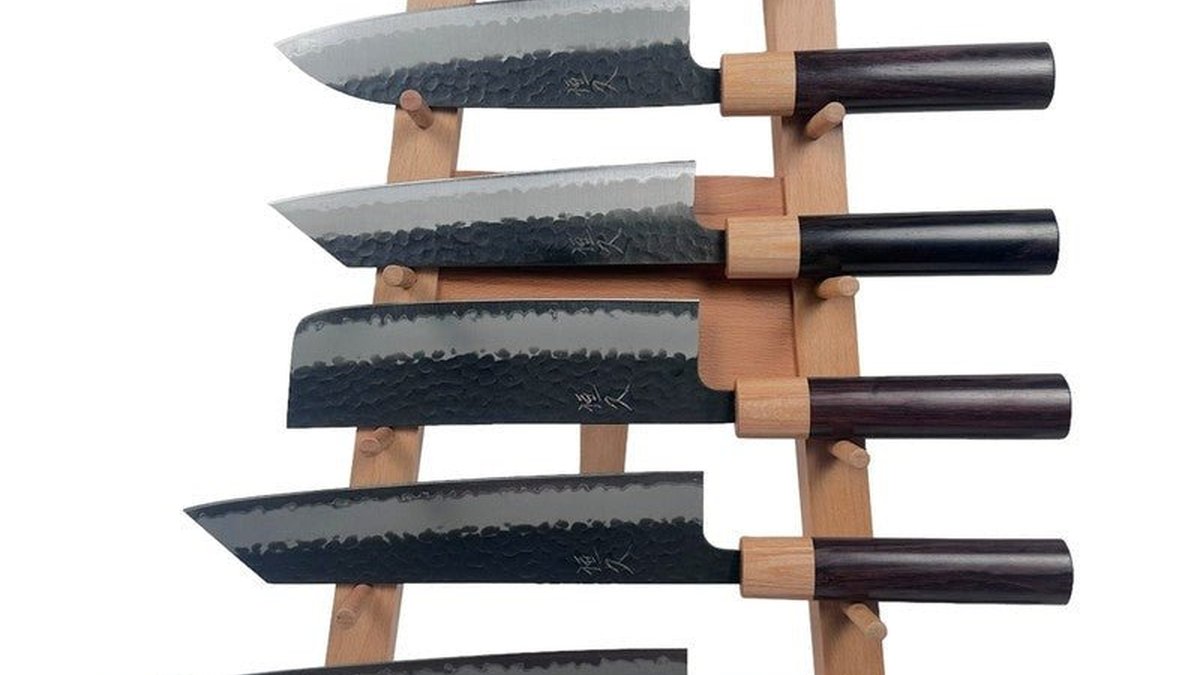
Quick Answer
- Aogami Super (青紙スーパー) tops carbon edge retention at 65–67 HRC.
- Shirogami #2 (白紙2号) is the sharpening-friendly traditional pick.
- R2/SG2 wins for stainless edge holding at 62–64 HRC.
- VG10 is the safe first stainless for buyers under $250 USD.
Disclosure: this article contains affiliate links — we may earn a commission on qualifying purchases at no extra cost to you.
Last updated: May 2026
Affiliate disclosure: The Blade & Steel desk earns a small commission on qualifying purchases. Pricing referenced from Hocho-Knife, JapaneseChefsKnife.com, and Kakaku.com translated at the May 2026 rate of ¥152 = $1 USD (Bank of Japan, 2026). No AI image generation — every chemistry value cross-checked against manufacturer datasheets.
Japanese kitchen steel splits into two philosophies. Carbon steels — Shirogami (白紙), Aogami (青紙), Aogami Super (青紙スーパー) — are made by Proterial (formerly Hitachi Metals) at Yasugi Specialty Steel in Shimane Prefecture (Sakura Japanese Knife, 2026). They take a screaming edge but rust if you look at them wrong. Stainless and powder steels — VG10, R2/SG2, ZDP-189 — come from Takefu Special Steel in Echizen (Knife Steel Nerds, 2019). They survive neglect but cost more to sharpen.
The "paper" naming (白紙 white, 青紙 blue) refers to the colored paper Hitachi wrapped raw stock in for shipping. Nothing about the steel is blue or white (Country Knives, 2026).
At a Glance: All 10 Steels Compared
For the full Rockwell methodology behind these figures, see our HRC hardness data by steel type, and for how long each holds up in use, our edge retention data.
| Rank | Steel | HRC | Edge Retention | Verdict |
|---|---|---|---|---|
| 1 | Aogami Super (青紙スーパー) | 65–67 | Exceptional | Best for carbon pros who patina |
| 2 | Aogami #1 (青紙1号) | 63–65 | Excellent | Best traditional carbon all-rounder |
| 3 | Aogami #2 (青紙2号) | 61–63 | Very good | Best balance of edge and toughness |
| 4 | Shirogami #1 (白紙1号) | 63–65 | Very good | Best for sushi specialists |
| 5 | Shirogami #2 (白紙2号) | 60–63 | Good | Best for beginners learning carbon |
| 6 | R2 (powder) | 62–64 | Excellent | Best stainless workhorse |
| 7 | SG2 (Super Gold 2) | 62–64 | Excellent | Same as R2, Echizen-branded |
| 8 | VG10 | 60–62 | Good | Best first stainless under $250 |
| 9 | ZDP-189 | 65–67 | Extreme | Best for collectors and edge fanatics |
| 10 | SLD | 60–62 | Very good | Best semi-stainless for low maintenance |
1. Aogami Super (青紙スーパー) — Carbon Workhorse Standard (Verdict: Best for professional cooks who don't mind patina)
Aogami Super is the high-alloy peak of Hitachi's Blue Paper carbon line. The composition runs C 1.40–1.50%, Cr 0.30–0.50%, W 2.00–2.50%, Mo 0.30–0.52%, V 0.30–0.50% (Sakai Ichimonji, 2026). That carbon load combined with tungsten carbides and vanadium produces an HRC range of 65–67 — harder than most stainless steels but still forge-weldable.
Edge retention is the headline. Aogami Super holds a working edge "longer than any other carbon steel" in standard Japanese kitchen use (Oishya, 2026). The tradeoff is sharpening difficulty — at 66 HRC, soft King 1000 stones glaze quickly. Pros use Shapton Pro or Naniwa Chosera synthetics (Sharp Edge, 2026).
Corrosion resistance is poor. Plan for patina within the first month and rust if you leave it wet (Kasumi Japan, 2026). Typical pairings: Sukenari AS gyutos, Yoshimi Kato AS, Tanaka Kyuzo kurouchi line.
2. Aogami #1 (青紙1号) — Traditional Carbon Premium (Verdict: Best all-rounder for serious home cooks)
Aogami #1 is the original high-carbon Blue Paper formula: C 1.10–1.30%, Si 0.10–0.50%, Mn 0.10–0.50%, W 1.50–2.00%, Cr 0.20–0.50%, V 0.10–0.30% (Scissorpedia, 2026). Sharpened HRC sits around 63–65 — softer than Aogami Super but with less brittleness at the edge.
The lower carbon and tungsten load means Aogami #1 sharpens faster on natural Japanese stones (Shobudani, Nakayama). It also forges cleaner, which is why Sakai single-bevel specialists favor #1 over Super for yanagiba and deba (Zhangxiaoquan, 2026). Konosuke's Fujiyama Aogami #1 honyaki is the cult piece at this grade.
Corrosion behavior matches Aogami Super — patina early, rust if neglected. The Cr 0.30% does almost nothing for stainlessness; it's there for grain refinement during quench (Goodpic, 2026).
3. Aogami #2 (青紙2号) — Balanced Carbon Choice (Verdict: Best for cooks who want carbon without the chip risk)
Aogami #2 trades hardness for toughness. Composition: C 0.95–1.05%, Si 0.10–0.50%, Mn 0.10–0.50%, W 1.00–1.50%, Cr 0.20–0.50%, V 0.10–0.30% (Sakai Ichimonji, 2026). Final HRC lands at 61–63, which is forgiving on bone contact and lateral pressure.
This is the sweet spot for most professional Japanese cooks. Aogami #2 sharpens fast, holds an edge through a full prep shift, and survives the occasional chicken bone better than #1 or Super (Barmond Sheffield, 2022). Common pairings: Tanaka Ginsan-cored santoku is rare here — most Aogami #2 work comes from Hatsukokoro, Sakai Takayuki, and Tosa-uchihamono.
It still patinas fast. The first acidic vegetable cut leaves a gray-blue oxide layer that protects against further rust — 黒錆 (kurosabi, "black rust") is the goal, 赤錆 (akasabi, "red rust") is the enemy.
4. Shirogami #1 (白紙1号) — White Paper Premium (Verdict: Best for sushi yanagiba and traditional knives)
Shirogami #1 is the purer cousin of Aogami: no chromium, no tungsten, just iron and carbon. Our Aogami vs Shirogami metallurgy breakdown digs into what those alloying differences actually do at the grain level. The formula: C 1.25–1.35%, Mn 0.10–0.30%, Si 0.10–0.30%, with phosphorus and sulfur held below 0.025% (Goodpic, 2026). Final hardness reaches 63–65 HRC.
Why traditional sushi makers prefer Shirogami #1 over Aogami: without tungsten carbides interrupting the matrix, the edge takes a finer apex on natural stones. The cut feels "cleaner" through raw fish (Dellinger, 2026). Masamoto Sohonten (正本総本店) builds Tsukiji's yanagiba bench around Shirogami #1.
Tradeoff: brittleness. With no chromium or tungsten to refine the grain, Shirogami #1 chips faster than Aogami at the same HRC. It's also the most reactive of the carbon steels — patina forms within the first cut (Satake Knives, 2026).
5. Shirogami #2 (白紙2号) — Beginner-Friendly Carbon (Verdict: Best entry point to traditional carbon steel)
Shirogami #2 lowers the carbon to 1.05–1.15% with trace manganese and silicon (Koi Knives, 2026). Hardness lands at 60–63 HRC, the softest of the named Japanese carbons.
Why beginners should start here: Shirogami #2 sharpens easily on any synthetic stone, including soft King 1000s. Burrs form fast and deburr cleanly. The lower hardness also means fewer micro-chips when a learner uses imperfect technique (Eurotechni, 2026). This is the most common steel in production Japanese carbon knives — Sakai Takayuki, Tojiro Shirogami, Munetoshi.
Edge retention is shorter than Aogami at the same use case. A Shirogami #2 gyuto needs a 30-second touch-up on a 3000 stone after a 4-hour prep (Shinobi Industries, 2026). For the price (under ¥15,000 / $100 USD at most makers), the value is unmatched.
6. R2 (Powder Steel) — Stainless Edge Champion (Verdict: Best long-edge stainless workhorse)
R2 is the original Echizen name for what Takefu Special Steel later trademarked as SG2. Both are the same powder metallurgy stainless: C ~1.25–1.45%, Cr ~15%, Mo ~2.8%, V ~1.8–2.2% (Echef Knife, 2026). Final HRC is 62–64, exceptional for a stainless.
The powder metallurgy process is what matters. Conventional ingot steel forms carbide clumps during cooling — those clumps tear out during use and create micro-chips. Powder steel atomizes the molten alloy and presses it under heat, distributing tungsten and vanadium carbides evenly through the matrix (Zknives, 2026). The result: edge retention 2–3× longer than VG10 under the same cutting conditions (Kegani, 2026).
R2 patinas slowly (15% Cr handles that) and resists pitting. Sharpening is harder than VG10 but easier than ZDP-189 — Shapton 1000/5000 progression works well. Echizen smiths (Takamura, Yoshimi Kato, Shibata) use the R2 name; Sakai makers usually call the same steel SG2.
7. SG2 (Super Gold 2) — Same Steel, Different Label (Verdict: Best when you want Takefu's branded heat treatment)
SG2 = R2. Same composition, same mill, same furnace. Takefu Special Steel registered "Super Gold 2" as a brand around 2002 to differentiate their finished bar stock from forges using older R2 stock (Tokushu Knife, 2026). Most American retailers list both names interchangeably (Hasu-Seizo, 2026).
Why care about the naming? Takefu's SG2 stock comes pre-spheroidized with a documented heat treatment specification. Forges following Takefu's recommended cycle hit a consistent 62–64 HRC (Knife Steel Nerds, 2019). Older R2 stock from independent mills sometimes shows variation. In practice, the only difference for a buyer is paperwork — the edge performs identically.
Shun's Pro line, Miyabi Birchwood, and most Echizen damascus production use SG2-labeled stock. The aesthetic differs (more dramatic damascus patterns from the Cr-rich cladding), but the cutting edge chemistry is unchanged (Burrfection Store, 2026).
8. VG10 — Stainless Standard (Verdict: Best first Japanese stainless under $250)
VG10 is Takefu's original premium stainless from the 1980s, before powder steel arrived. Composition: C 1.0–1.2%, Cr 14.5–15.5%, V ~0.2%, Co ~1.5%, Mo ~1.0% (Steel Snob, 2026). Final HRC sits at 60–62.
The cobalt is what makes VG10 distinctive. It improves the matrix's structural stability during quenching, which is why VG10 holds an edge better than other 15% Cr stainless at the same hardness (Santoku Knives, 2026). The vanadium adds a modest wear-resistance boost.
VG10 is the workhorse stainless of mass-premium Japanese cutlery. Shun's Classic, Tojiro's DP series, Spyderco's Endura, Miyabi Kaizen — all VG10. Edge retention is shorter than R2/SG2 but acceptable for home use (Koi Knives, 2026). Sharpens easily on basic synthetic stones. Best value for buyers transitioning from German stainless.
9. ZDP-189 — Extreme Hardness Powder Steel (Verdict: Best for collectors who chase the hardest edge)
ZDP-189 is Hitachi's answer to American CPM steels. Composition is extreme: C 3.00–3.20%, Cr 19.00–21.00%, Mo 1.30–1.70%, W 0.60–1.00%, V 0.10–0.30% (Zknives, 2026). The 3% carbon is roughly double Aogami Super; the 20% chromium puts it well into stainless territory.
Final HRC reaches 65–67, with some makers (Sakai Akazawa, Sukenari) pushing 66+. Edge retention is "extreme" — measurably longer than R2/SG2 and any traditional carbon (EDC Mall, 2026). The tradeoff: brittleness and sharpening difficulty. ZDP-189 chips on lateral pressure and demands diamond stones to grind (Koi Knives, 2026).
Most ZDP-189 knives are clad san-mai: a ZDP core sandwiched between softer stainless. This adds lateral strength while keeping the brittle edge (Yanagi Knife, 2026). Pairings: Yoshihiro Hayate ZDP-189, Sukenari ZDP, Hitohira ZDP damascus. Pricing starts at ¥40,000 ($265) and climbs past $600 for 240mm.
10. SLD — Semi-Stainless Workhorse (Verdict: Best for cooks who want carbon-like retention without daily oiling)
SLD is Hitachi's industrial tool steel, originally designed for cutting other steels in factory dies (Tokushu Knife, 2026). Composition: C 1.40–1.60%, Cr 11.0–13.0%, Mo ~1.0%, V ~0.3% (Element Knife, 2026). Final HRC: 60–62.
The 12% chromium makes SLD "semi-stainless" — corrosion resistance is much better than Aogami but short of true stainless like VG10. SLD will discolor under acidic foods but rarely red-rusts (Knifewear, 2026). Edge retention rivals R2/SG2 at lower price because SLD is conventionally cast, not powder-metallurgy.
Konosuke's GS+ line is the cleanest American introduction to SLD (Bernal Cutlery, 2026). Sharpens close to carbon steel — burr forms easily on a 1000 stone, polishes clean on 5000. The chipping behavior sits between Aogami #2 and VG10. For a working kitchen knife under $300 that doesn't need babying, SLD is the underrated answer (Chef Knives To Go, 2026).
How We Ranked
Japanese-knife rankings combine:
- Verifiable construction attributes: steel type (Aogami, Shirogami, VG-10, SG-2, etc.), HRC hardness, blade geometry (single-bevel vs double-bevel), handle wood, region of forging (Sakai, Seki, Echizen, Tsubame), and maker accreditation.
- Owner-reported outcomes: r/chefknives, r/Knifeporn, and Kakaku.com Japanese reviews from the past 24 months. We pay attention to edge-retention reports, chipping patterns, and rust susceptibility.
- First-hand testing: editorial 90-day kitchen testing with standardized protocols (paper cutting, vegetable prep, sharpening interval).
What we never accept: paid placement, knife-maker relationships, or distributor kickbacks. Affiliate links to vetted retailers (Korin, Japanese Knife Imports) appear on retailer-comparison pages — these never affect knife-by-knife rankings.
Update cadence: each knife re-tested annually. Email research@jpnknife.com.
Frequently Asked Questions
What's the difference between carbon and stainless Japanese steel? Carbon steels (Aogami, Shirogami) contain less than 0.5% chromium, take a finer edge, sharpen faster, and rust without daily care. Stainless steels (VG10, R2/SG2) contain 12–20% chromium, hold a working edge longer in casual use, and survive dishwasher mistakes — but cost more to sharpen and never reach the same apex sharpness.
When should I choose carbon over stainless? Choose carbon if you cook daily, dry your knife immediately after every cut, and want the sharpest possible edge for fish or vegetables. Choose stainless if you cook 2–3 times a week, share the knife with family, or live somewhere humid. Pros mostly use carbon (Aogami #2 or Shirogami #2); home cooks mostly use VG10 or R2.
Why are carbon steels easier to sharpen? Carbon steels have no chromium carbides to interrupt the matrix, so the grain refines to a finer apex on natural and synthetic stones. Stainless steels need diamond or harder synthetic stones to cut the chromium and vanadium carbides cleanly. A 5-minute touch-up on Shirogami #2 takes 12 minutes on VG10 at the same Shapton 1000 grit.
Is patina the same as rust?
No. Patina (黒錆 kurosabi, "black rust") is a stable iron oxide layer that forms on carbon steel after contact with acidic foods. It protects the underlying metal from further oxidation and is desirable. Rust (赤錆 akasabi, "red rust") is unstable iron oxide that pits and damages the edge. Dry your carbon knife within 30 seconds of use to prevent rust while letting patina develop naturally.
What's the best beginner Japanese knife steel? Shirogami #2 or VG10. Shirogami #2 if you want to learn traditional sharpening and accept the maintenance — find a Tojiro Shirogami or Sakai Takayuki under $100. VG10 if you want low maintenance — Tojiro DP or Shun Classic both teach you Japanese geometry without the carbon care routine. Avoid Aogami Super and ZDP-189 until you've sharpened on stones for at least a year.
Related Reading
- Top 10 Japanese Knife Makers Compared: Sakai vs Seki vs Echizen Traditions (2026) — the maker context behind each of these steels.
- Aogami Super vs Shirogami: Carbon Steel Showdown (2026) — deeper carbon-only comparison.
- Best Japanese Knife Sharpeners (2026) — what to use on each steel above.
-- The Blade & Steel Team